

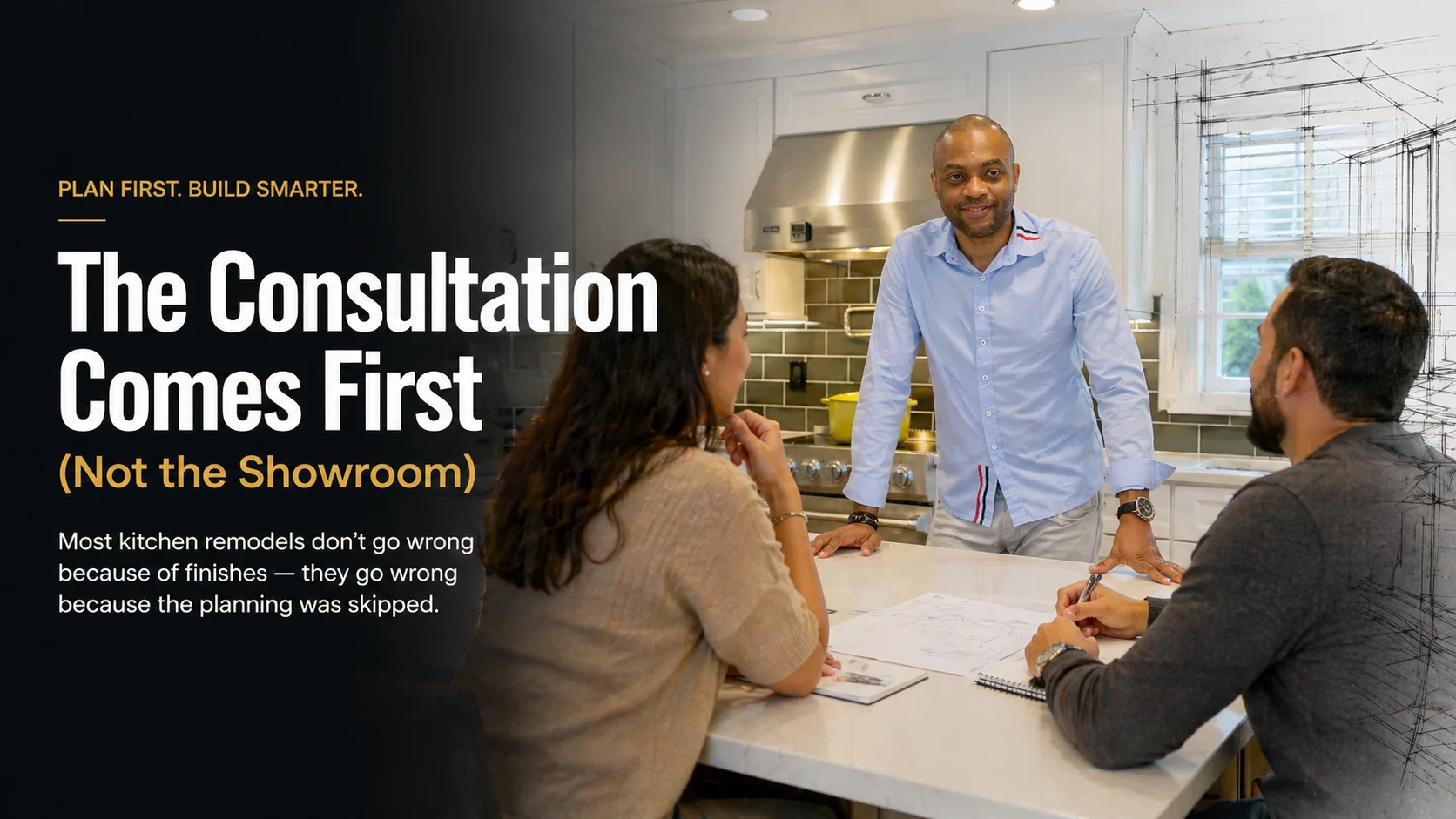
Most people don’t get into trouble because of what they pick — they get into trouble because of where they start.
Most people start their kitchen remodel in the wrong place.
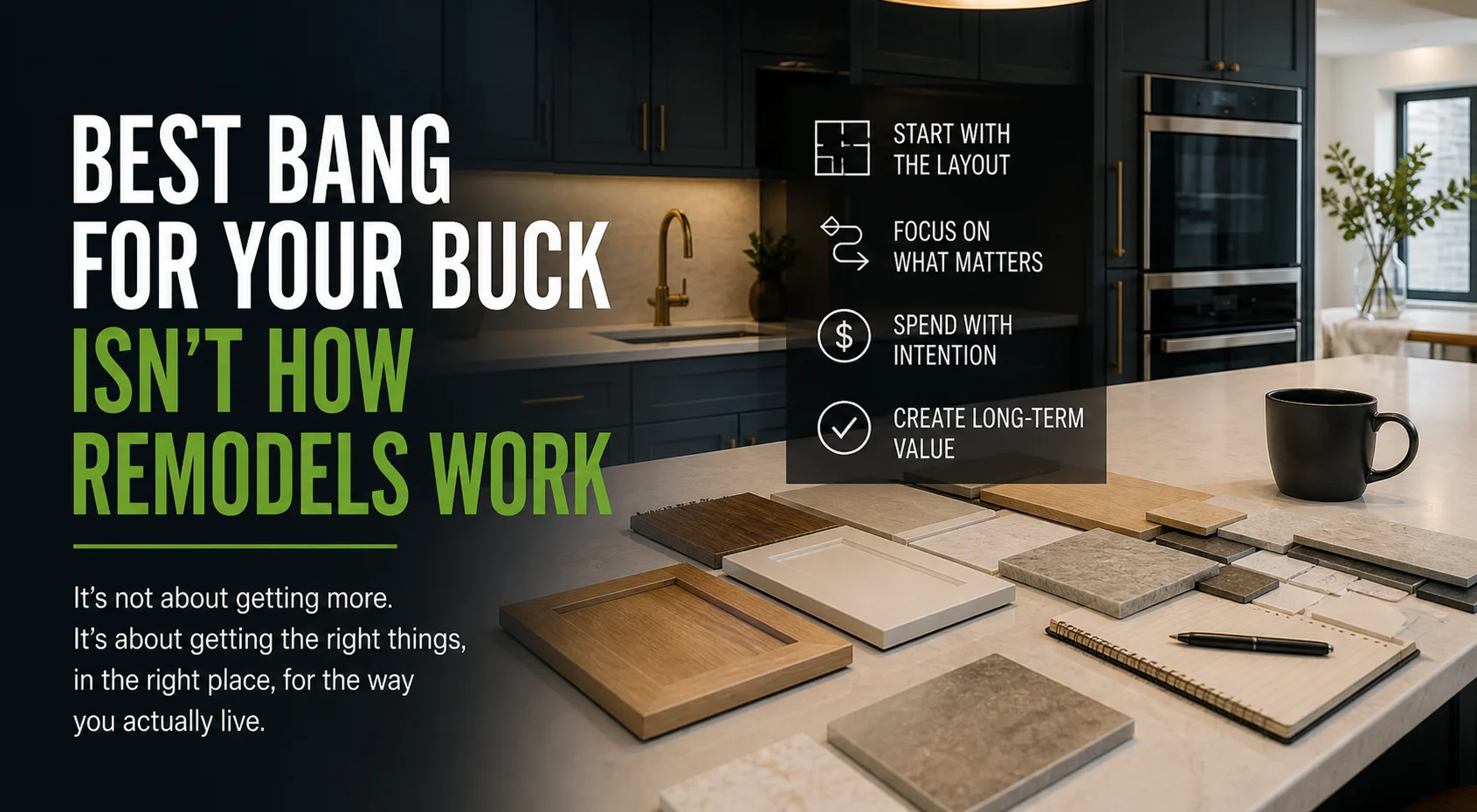
They go straight to a showroom. Start looking at cabinet doors, countertops, finishes… and it feels like progress. Like you’re getting somewhere. And I get it — it’s visual, it’s tangible, you can touch things, compare things, start forming an idea in your head.
And honestly, nobody tells you otherwise. Most of the industry is set up that way. You walk in, you start picking, and before you know it you feel like you’re “in the process.”
But here’s the thing… that’s not where a kitchen remodel starts. That’s somewhere in the middle.
And if you start there, you’re already a few steps behind without even realizing it.
Because now you’re not really making decisions — you’re reacting.
You like a door style, okay… but does the layout even support that?
You want a big island, great… but does the room actually handle that without killing the flow?
You’re looking at a display kitchen that looks amazing, but that kitchen wasn’t built around your house, your structure, your family, the way you live in the space.
So what ends up happening is you start building a kitchen around pieces… instead of building those pieces into a plan.
And this is where things start to drift.
It doesn’t feel wrong in the moment — everything still looks good — but you’re stacking decisions on top of decisions without really knowing if they belong together yet.
And later on, that’s where the friction shows up.
Budget gets stretched in places it shouldn’t.
Things feel just a little off.
Nothing is “bad,” but it’s not right either.
And that’s usually why.
Where Most Projects Actually Begin
Now here’s the part most people skip, because it’s not exciting — and honestly, it’s the part that makes the biggest difference.
The real start is someone walking your space and taking it apart mentally before anything gets put back together.
Seeing how you move through it.
How you cook.
How your family actually uses it day to day.
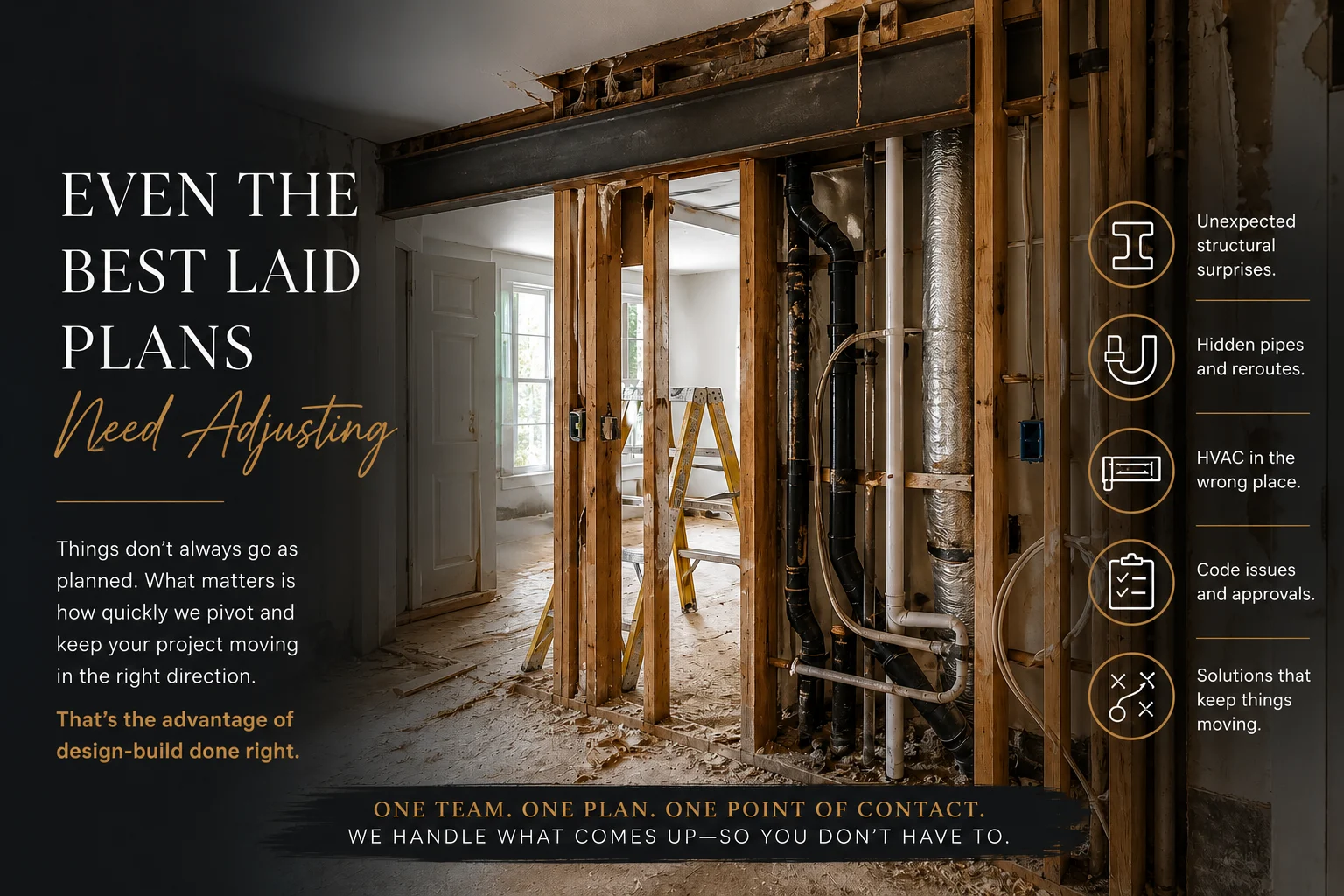
Looking at walls, structure, mechanicals… what can move, what shouldn’t, what looks simple but really isn’t once you open it up.
That’s the starting point.
Before You Pick Anything…
Most projects don’t run into problems because of the finishes.
They run into problems because decisions were made too early — before the space was fully understood.
Here’s the thing… this step isn’t about picking anything yet. It’s about actually understanding what you’re working with.
What the space can support. What can move, what can’t. Where things start to get tight, or where you actually have more flexibility than you think. Because once you see that clearly, everything else starts to make more sense.
You’re not guessing anymore. You’re not reacting to what looks good in a showroom. You’re making decisions based on how the space actually works — and how you actually live in it.
And that’s what prevents all the stuff people usually run into later… the layout that doesn’t quite flow, the changes that cost more than they should, the moments where something has to get redone because it was decided too early.
It’s not the exciting part — but it’s the part everything else depends on.
This Is Where the Real Decisions Get Made
Because this is where the big decisions actually happen. Not in the showroom. At the table. On paper. In conversation.
Should this wall come down… or should it stay?
And if it comes down, what does that actually mean structurally?
Does opening it up make the space better… or just bigger?
Where should the kitchen really live within the home?
What matters more here — storage, flow, seating, light?
These are the decisions that shape everything that comes after.
And here’s where people get caught — once you start picking finishes before answering those questions, you’re locking yourself into choices that may not even serve the space properly.
Now you’re designing backwards.
And this is also the part nobody really wants to hear… this step takes time.
It’s not something you knock out in one visit and move on from. It takes thinking. Adjusting. Going back and forth. Refining things until it actually makes sense — not just on paper, but in real life.
Because putting cabinets on a wall is easy.
Making a kitchen actually work the way it should… that’s the hard part.
And if you’ve ever walked into a kitchen that just feels right — where everything flows, nothing feels forced — that didn’t happen because someone picked the perfect cabinet door.
That happened because the plan behind it was solid before anything got built.
Everything else plugs into that.
So if you’re thinking about remodeling, just understand this…
The showroom is not the starting line. It’s a tool. A good one. But it only works when you already know what you’re building.
The real start is the conversation. The walk-through. The part where someone actually understands your space before anything gets selected.
And this is usually where things go one of two ways.
You either take the time to plan it properly — understand the space, make the right decisions early — and the rest of the project has a direction.
Or you start picking… and spend the rest of the project trying to make those choices fit.
And that’s where the stress comes from.
That’s where budgets get pushed.
That’s where things don’t quite land the way you expected.
So if you’re even thinking about remodeling… don’t rush past this part.
Have the conversation first.
Understand what you’re actually working with before you commit to anything.
If you want, we can walk your space with you and go through it properly — no pressure, no selling — just a real conversation about what makes sense and what doesn’t before anything gets locked in.



Leave A Comment