
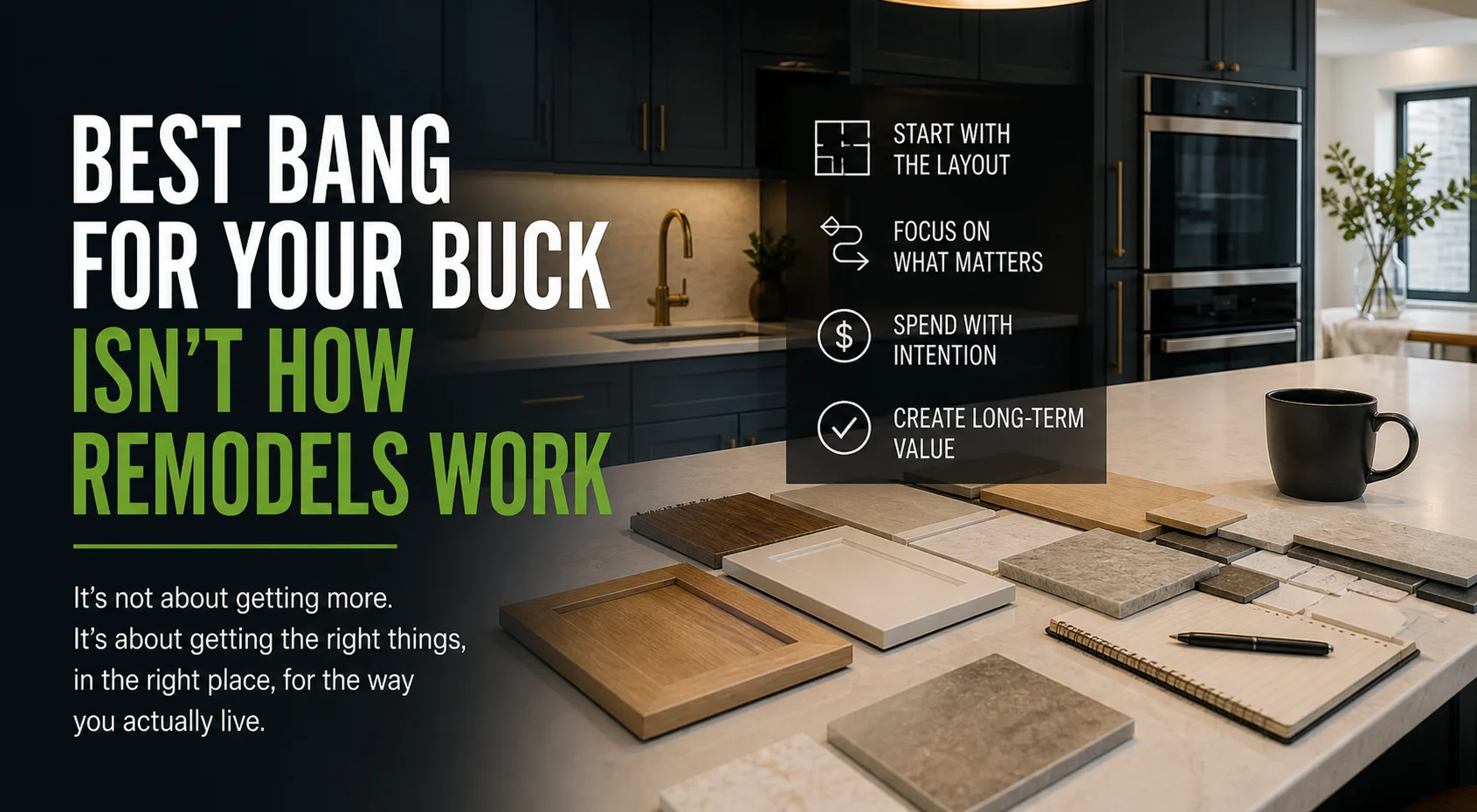
Right budget in the right areas — that’s where the real impact comes from.
Money doesn’t grow on trees. And whether someone is investing $50K or $150K+ into a renovation, the goal is the same — they want the most value out of every dollar. That doesn’t change with budget. What changes is how that budget gets allocated.
The difference comes from how well the space is understood before anything begins. When you take the time to walk the house, study the floor plans, and really think through how everything is going to come together, you can start making decisions at the drawing table that have a real impact on the outcome — not just visually, but functionally and financially as well. That’s where the return on investment actually starts.
As a design-build firm, we don’t get caught up in brands the way most people expect. We get calls all the time from homeowners asking what cabinet brand or countertop brand we carry — often before they’ve even set up a consultation. That usually means they’ve already been sold on something. But brands carry a cost, and when your budget has to cover plumbing, electrical, potential structural work, layout changes, and relocations of doors, windows, or walls… what you need isn’t a brand. What you need is someone who knows how to break that budget down and put it back together in a way that actually works.
The problem is, the biggest value in a remodel usually isn’t sitting in those comparisons
It’s not in the door style, the countertop edge, or the appliance package. Those things matter, but they’re not what determines whether the space actually works when it’s done.
The real value shows up in how everything comes together as a whole.
How the space flows when you move through it.
How it supports the way you use it every day.
And whether it actually solves the problem that made you want to remodel in the first place.
That part doesn’t show up on a spec sheet.
You can’t line it up side by side and compare it.
It comes from understanding the space early — really understanding it — and building everything around that foundation.
That’s where the difference is made.
Just like a strong marriage, when you really look at it, you’ll see constant adjustments on both sides — small compromises that keep everything balanced along the same fulcrum.
It’s not about one side winning.
It’s about keeping the whole thing working.
It’s the same with a design-build project.
It’s easier to spend money on things you can see.
A nicer finish.
A thicker countertop.
A higher-end appliance.
Those feel like upgrades. You can point to them, justify them, compare them.
But layout, flow, and function? That’s harder to measure — so it gets pushed to the side.
And that’s backwards.
Because you can drop high-end finishes into a bad layout and the space will still feel off.
But when the layout is right, even simpler selections come together in a way that feels complete… intentional.
That’s the part people miss when everything turns into a trade-off.
We’re constantly balancing the design against the budget, making decisions early so everything comes together properly.
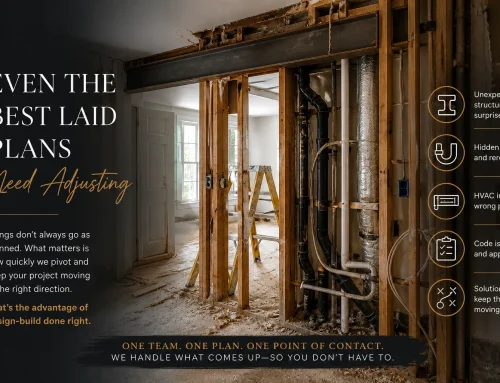
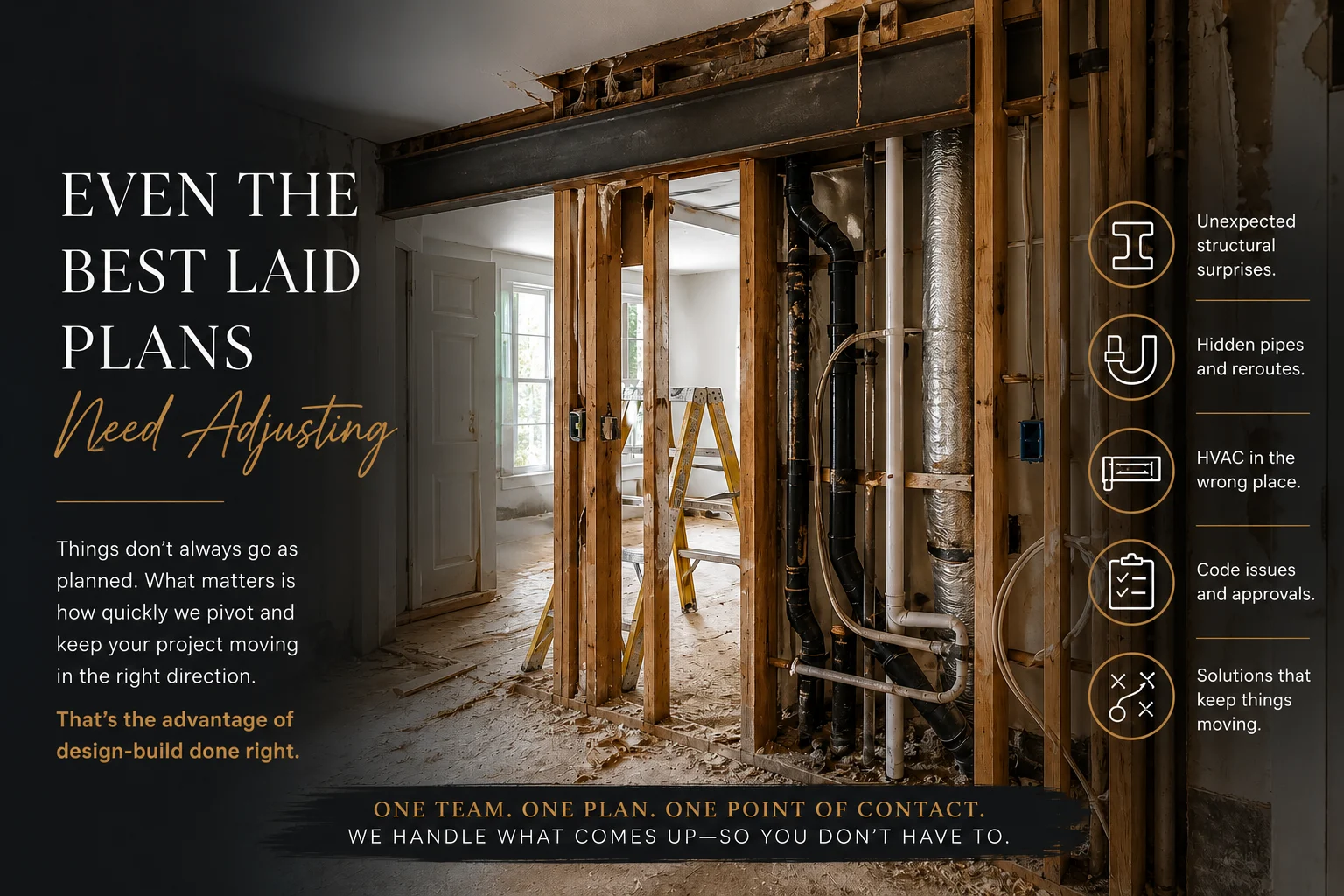
Sometimes that means adjusting a wall opening so we can use an LVL beam anchored to the supporting structure below instead of requiring a footing and post for a larger structural solution.
That one decision alone can shift the cost significantly.
And now that savings can be used somewhere else in the project — where it actually improves how the space works.
And that’s usually where people get stuck.
That’s where budgets start stretching in the wrong direction.
Money starts getting pushed into things that feel important in the moment, while the bigger decisions — the ones that actually shape how the space works — don’t get the same attention.
And once those decisions are made, everything else has to follow.
At that point, you’re not really optimizing anymore.
You’re adjusting.
This is where experience matters.
When you actually spend time in the space… when you understand the layout, the structure, the mechanicals… you can start making decisions early that change everything.
Not after the fact.
Right there on the drawing table.
Sometimes that’s structural.
Maybe we don’t need to open a wall as wide as you thought. If we reduce that span, we can use an LVL beam anchored to the supporting wall below instead of going down the road of a larger structural solution with posts and footings.
That one decision alone can move real money.
And now that money can go somewhere else.
Maybe we move a door.
Maybe we open the kitchen another few feet.
Maybe we fix the way the space actually flows.
Same thing with selections.
You don’t always need the brand name that eats up $30K of your budget.
There are options out there — same wood, same soft-close, same finish, same warranty — just a different name.
And now you just saved $10K.
Not by cutting corners.
By understanding where the money should go.
Because believe me…
Nobody walks into a beautiful kitchen and asks what brand your cabinets are.
They don’t.
They walk in… look around…
and say:
“wow.”
And just like a good marriage — if you really look at it — you’ll see compromise on both sides.
Adjustments.
Balance.
Everything working along the same fulcrum to keep it together.
That’s what this is.
Not chasing upgrades.
Not comparing line items.
Balancing the whole thing so it actually works.
If your kitchen feels like it could be better…
it probably can be.
Let’s plan it the right way.
📞 914-888-7668