

Most kitchen remodels don’t fail because of poor materials—they fail because the planning process starts in the wrong place. If you’re considering a kitchen remodel in Westchester County, understanding how layout, cabinetry, and design work together is critical. You can explore how we approach full projects on our kitchen remodeling services in Westchester County page.
One of the most common mistakes homeowners make when planning a kitchen renovation doesn’t feel like a mistake at all.They start by choosing a cabinet door they love.It seems harmless. You walk into a showroom, you see a door style that catches your eye, and you think: This is it. This is my kitchen.
But the moment you begin a renovation with a door style, you unintentionally allow that door to dictate the entire project.
And a door should never dictate a kitchen.
A kitchen is not a furniture selection. It is an engineered space that must balance layout, storage, lighting, plumbing, structure, architectural language, and budget. When a project starts with an aesthetic decision instead of a design plan, everything that follows begins to bend around that early choice.
Once a door style is selected, it often pulls the homeowner toward a specific manufacturer that carries it. From there, the cabinet line becomes fixed — and with it, sizing standards, modification allowances, finish programs, accessory options, production timelines, and pricing structures.
At that point, the project can move in one of two directions.
In some cases, the cabinet program becomes artificially expanded. The selected brand may offer extended customization, upgraded finishes, expanded modifications, and premium add-ons. The cabinetry budget grows — not because the kitchen required expanded capability, but because the door style pulled the project into a larger manufacturing system. The space may not have needed more options. It may have needed better engineering. Better detailing. A more intelligent layout.
In other cases, the opposite happens. The cabinet line becomes restrictive. Fixed cabinet heights, limited depth variations, narrow finish programs, and structural workarounds begin shaping the design. Now the layout adjusts to the cabinet system — instead of the cabinet system supporting the layout.
Either way, the kitchen begins revolving around a door.
Even in fully Custom cabinetry, where virtually any door style can be produced, the sequencing of decisions still matters. Custom manufacturing removes catalog limitations — but it does not eliminate design consequences. Door profiles influence construction methods, overlay strategies, finish applications, hardware alignment, and reveal tolerances. Beginning with a door, even in a custom environment, can quietly steer layout decisions, sightlines, and detailing before the architectural context of the space has been resolved.
In those cases, the issue is no longer about what can be made but whether what is being made is appropriate for the room, the home, and the investment as a whole.
A kitchen exists inside an architectural ecosystem. It lives within ceiling heights, trim profiles, window proportions, flooring transitions, and the overall character of the home. You might love a sleek contemporary slab door. But installing it inside a traditional Tudor or colonial home without thoughtful architectural alignment can feel disconnected. You can technically do it. But unless the surrounding elements are redesigned to support it, the result often feels forced.
Design is not about preference alone. It is about coherence.
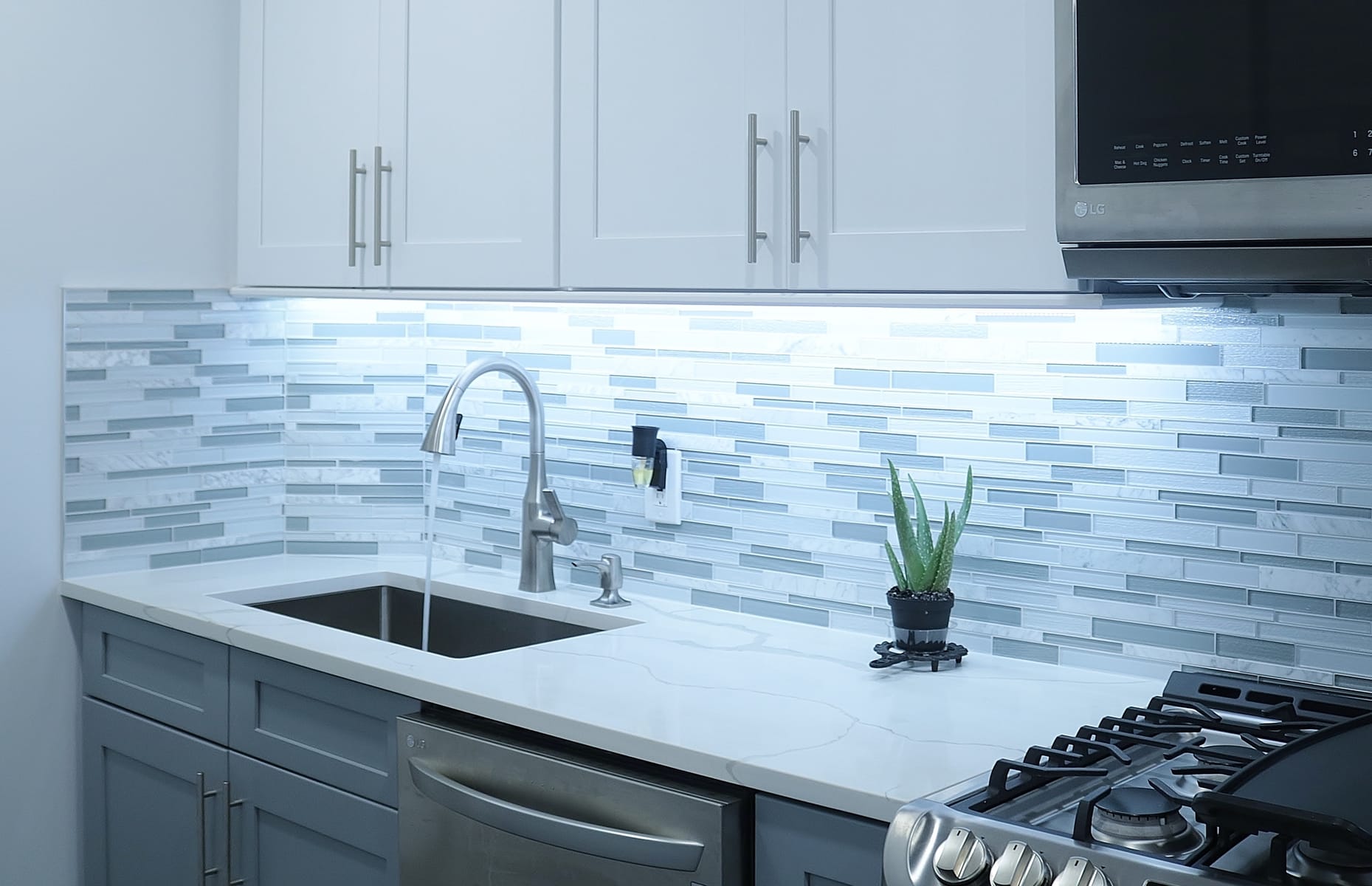
What Happens When You Choose Cabinet Doors Before Planning Your Kitchen Layout
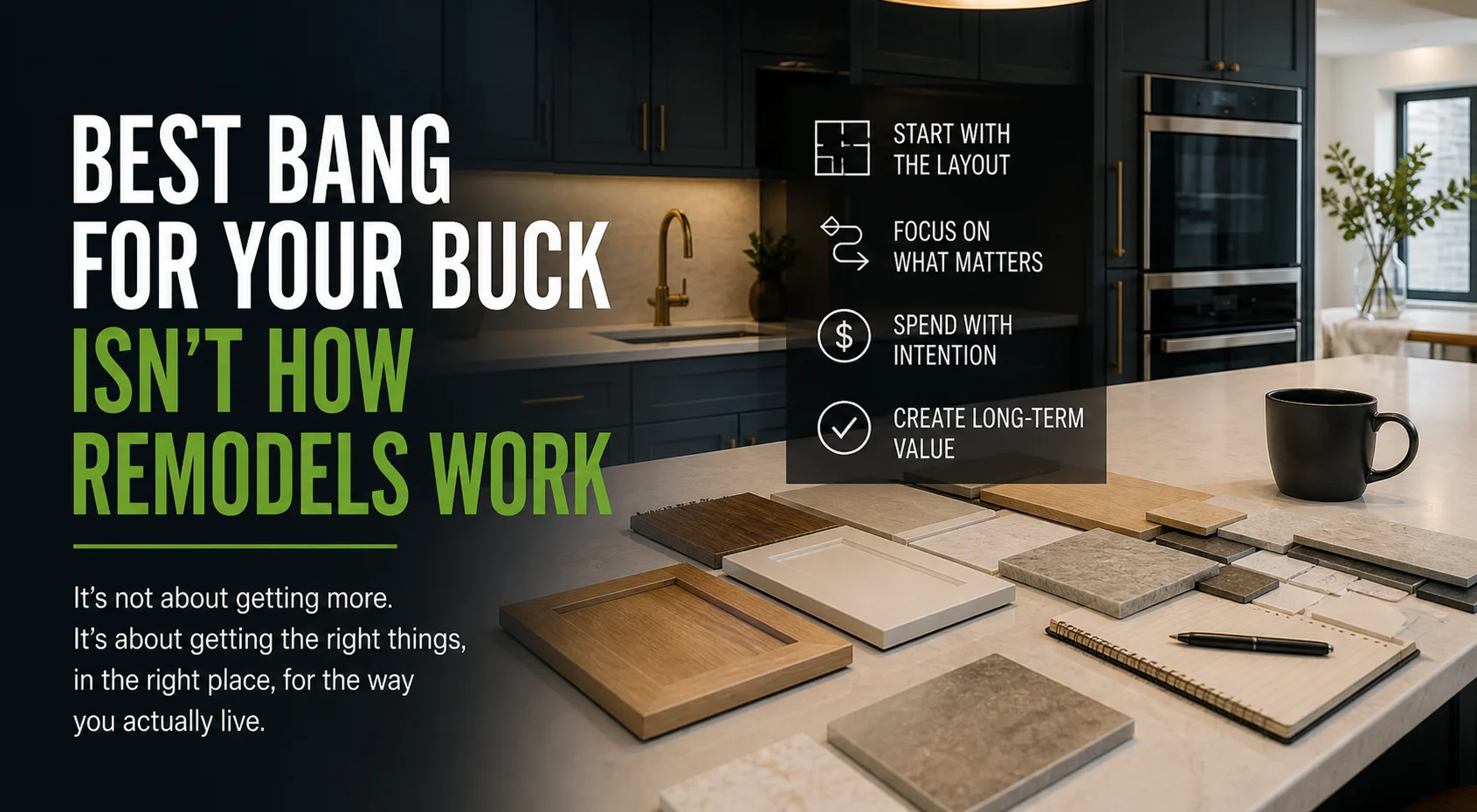
Renovations that increase long-term value are not driven by isolated features. They are driven by integration — where layout, cabinetry, finishes, and architectural context work together. Starting with a door style often leads to serious compromise. Budget gets allocated to the wrong area. Layout decisions get shaped by manufacturing limits. Architectural consistency gets overlooked. Brand selection happens too early. And the homeowner doesn’t always realize the cost of those compromises until the project is underway.
Why Kitchen Layout Should Be Designed Before Cabinet Selection
Sometimes it’s even different from the one you originally loved.
That’s not a loss. That’s design maturity.
When layout, engineering, architectural alignment, and budget framework are resolved first, cabinet selections become supportive decisions — not controlling ones.
How to Plan a Kitchen Remodel Before Choosing Cabinet Door Styles
A proper design plan forces clarity. It addresses workflow, storage strategy, structural conditions, lighting, plumbing, proportions, and overall investment allocation before aesthetics are finalized.
When those foundations are solved first, the right door style becomes obvious — not because it was chosen first, but because it fits the plan. This is why every project we undertake begins with a comprehensive kitchen design and planning process.
Start Your Kitchen Remodel With a Plan — Not a Cabinet Door
A kitchen should be built around function, flow, and architectural alignment. The door style should support that vision — not control it.
If you begin with the plan, the door becomes the finishing decision.
If you begin with the door, the plan becomes the compromise.
And in a space as important — and as valuable — as your kitchen, compromise is the one thing you should never design around.
Ordering materials
Demolition
Rough construction (plumbing, electrical, framing)
Installation phase
Final inspections
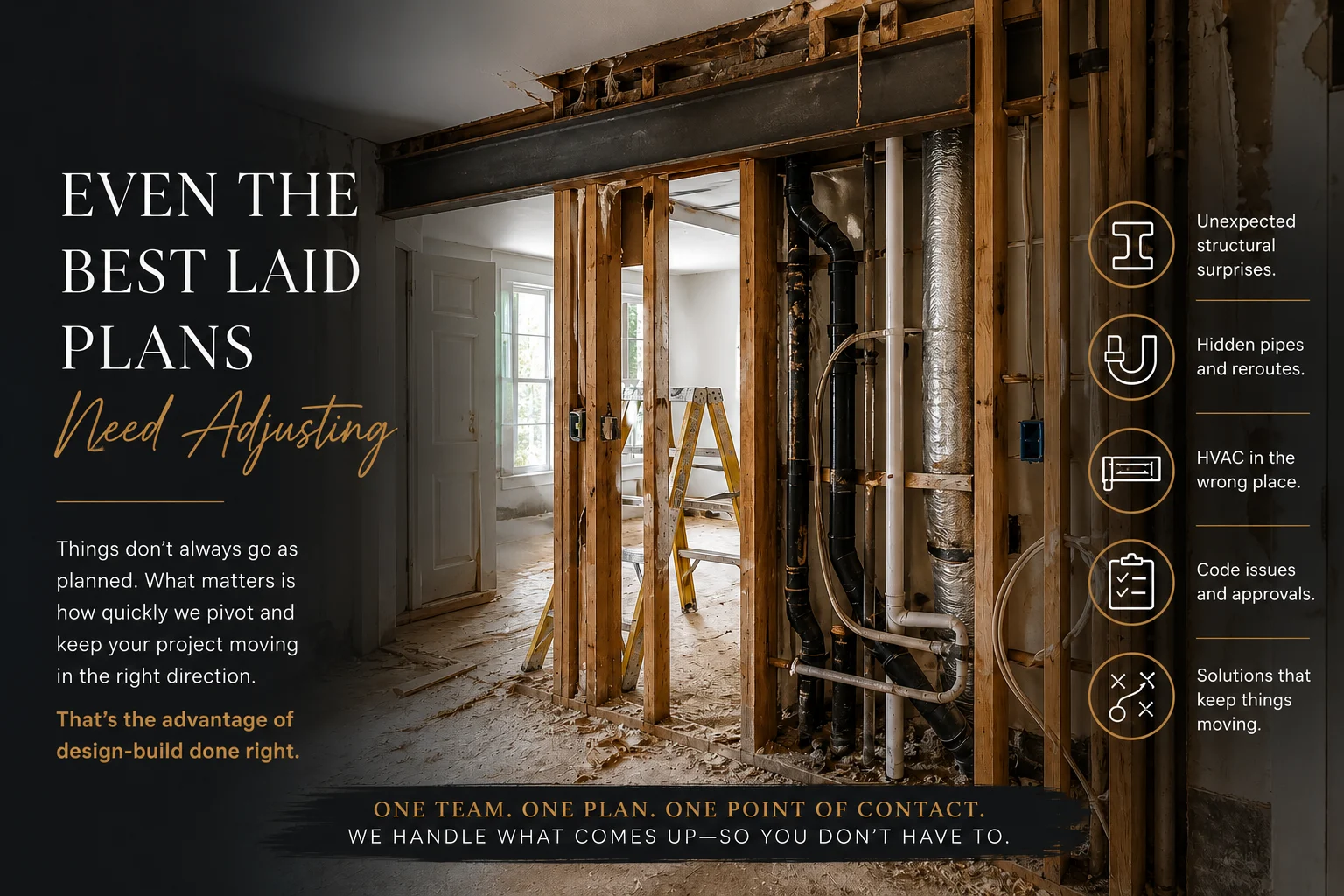
Understanding the phases reduces anxiety and keeps expectations aligned — so nothing that happens during construction comes as a surprise