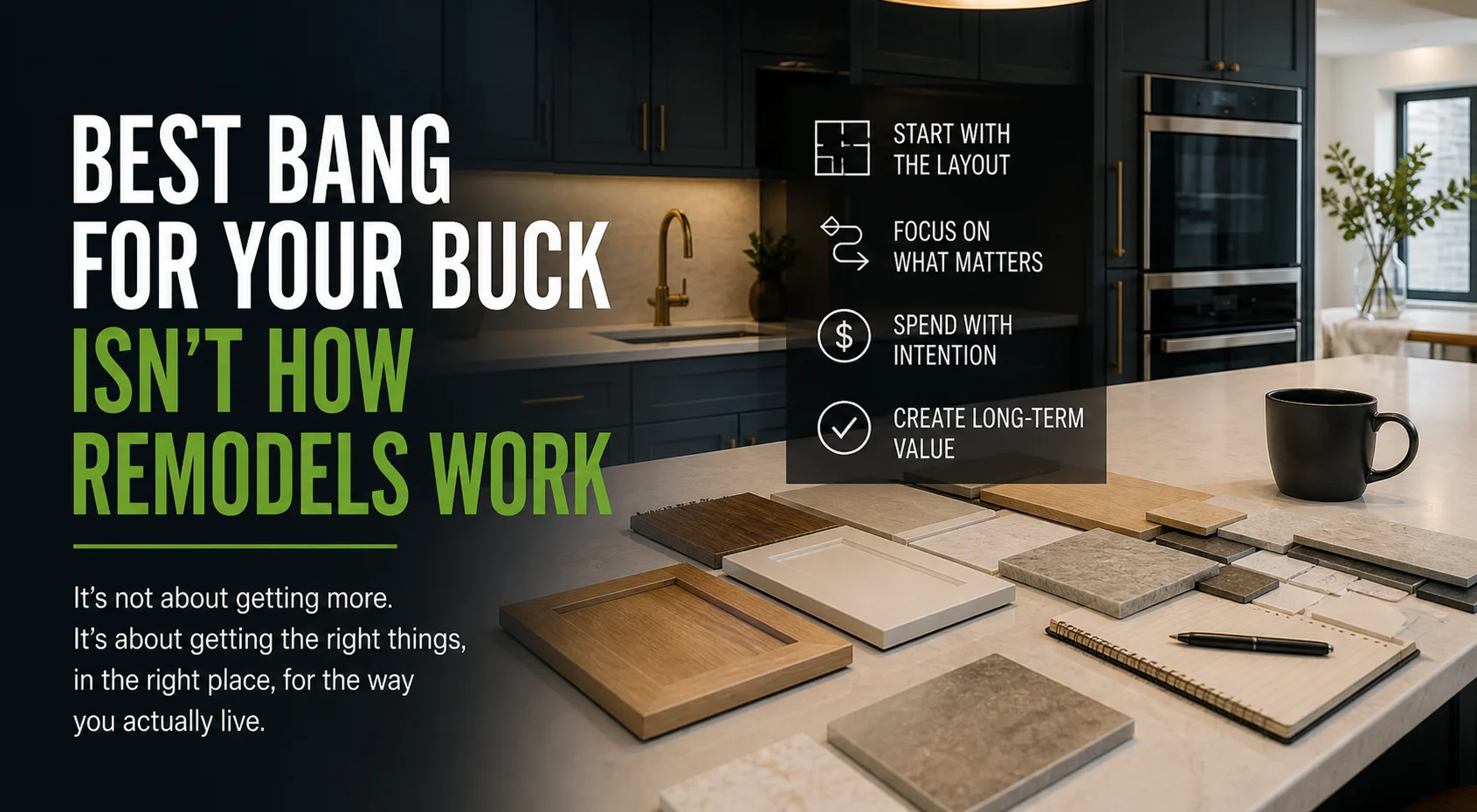


Not All Kitchen Remodels Are Created Equal: The Difference Between an Expense and an Investment
When it comes to remodeling a kitchen, especially when planning a kitchen remodel. Two homeowners may invest heavily in their kitchens, choose quality materials, and still walk away with very different outcomes. The difference often comes down to whether the space was properly designed for the home itself — its layout, its limitations, and the way the family actually lives.
Popular ideas like open-concept layouts, oversized islands, and trending features may work beautifully in one home and fall short in another. What adds value is not simply following what is popular or spending more money. It is making the right decisions for the specific space.
That is where the line between an expense and an investment begins.
Design: Where Value Is Created
Regardless of budget, every kitchen remodel involves spending on cabinetry, construction, finishes, and materials. The real question is whether that money is simply being spent, or whether it is being used to create a better-performing space with lasting value.
That difference comes down to design, this is where a structured design and planning process becomes critical
A strong kitchen design does more than make a room look attractive. It improves how the space functions, how it feels to live in, and how well it responds to the realities of the home itself. That is why two remodels with similar budgets can produce very different results.
Many homeowners underestimate this stage. Some assume the layout can be handled by a contractor or cabinet supplier alone. But layout decisions affect far more than where the cabinets go. They shape how the kitchen works as a whole.
More Than Cabinets and Countertops
A properly designed kitchen must account for far more than finish selections. It should address the full set of conditions that determine whether the room will actually function well once the work is complete.
That includes:
Ergonomics and functionality — how the kitchen supports movement, access, storage, and day-to-day use.
Structural realities — which walls can be altered, what limitations exist, and what changes are truly worth making.
Mechanical and electrical planning — lighting, appliance placement, ventilation, and the infrastructure needed to support them properly.
Plumbing and HVAC considerations — avoiding avoidable complications, unnecessary rerouting, and performance issues that can affect the finished space.
This is where the difference in approach becomes clear. Some layouts are built around fitting cabinetry into a room. A stronger approach is to design the kitchen as a complete environment first, then develop the cabinetry around that larger plan.
Why This Matters in Real Life
We have seen firsthand how expensive it can be when design decisions are not fully resolved at the beginning.
Not long ago, we were brought in to review a kitchen that had recently been completed. The homeowners had invested in a lower-cost remodel and moved forward without a proper design process. On paper, the project seemed done. In real life, the kitchen felt tight, the lighting was weak, and the storage did not function the way the family needed it to.
The issue was not that money had not been spent. It was that the space had not been fully resolved before construction began.
When we reviewed the same footprint, it became clear that the kitchen could have been planned in a far stronger way without requiring unnecessary expansion. A better layout, better balance, and better use of the room would have produced a very different result.
The Long-Term Value of Better Design
A kitchen is one of the most important spaces in the home, both in daily life and in long-term property value. When the design is strong, the return is felt immediately in how the room functions and later in how the home presents to future buyers.
Poor decisions made early can stay with a homeowner for years. A rushed layout, weak lighting plan, limited storage, or unresolved flow can turn an expensive remodel into a missed opportunity.
A kitchen that is properly designed from the start is far more likely to feel complete, function well, and hold its value over time
Final Thought: Invest Up Front
The best kitchen remodels are not defined only by the materials that go into them. They are defined by the quality of the decisions made before the work begins.
When the design is right, every dollar goes further. The space works better, feels better, and delivers stronger long-term value.
That is the difference between an expense and an investment.
To see what a properly designed kitchen looks like in practice, explore our award-winning kitchen remodel in Pelham Manor — recognized as Best Kitchen in Westchester Magazine 2016 — or our luxury kitchen transformation in New Rochelle. For a clear picture of what kitchen remodeling costs in Westchester, our pricing guide is a good starting point
A kitchen remodel becomes an investment when the right decisions are made from the start. If you’re planning a kitchen renovation in Westchester, contact RAJ Kitchen and Bath to discuss your project.
Call 914-888-7668 to schedule a consultation.