

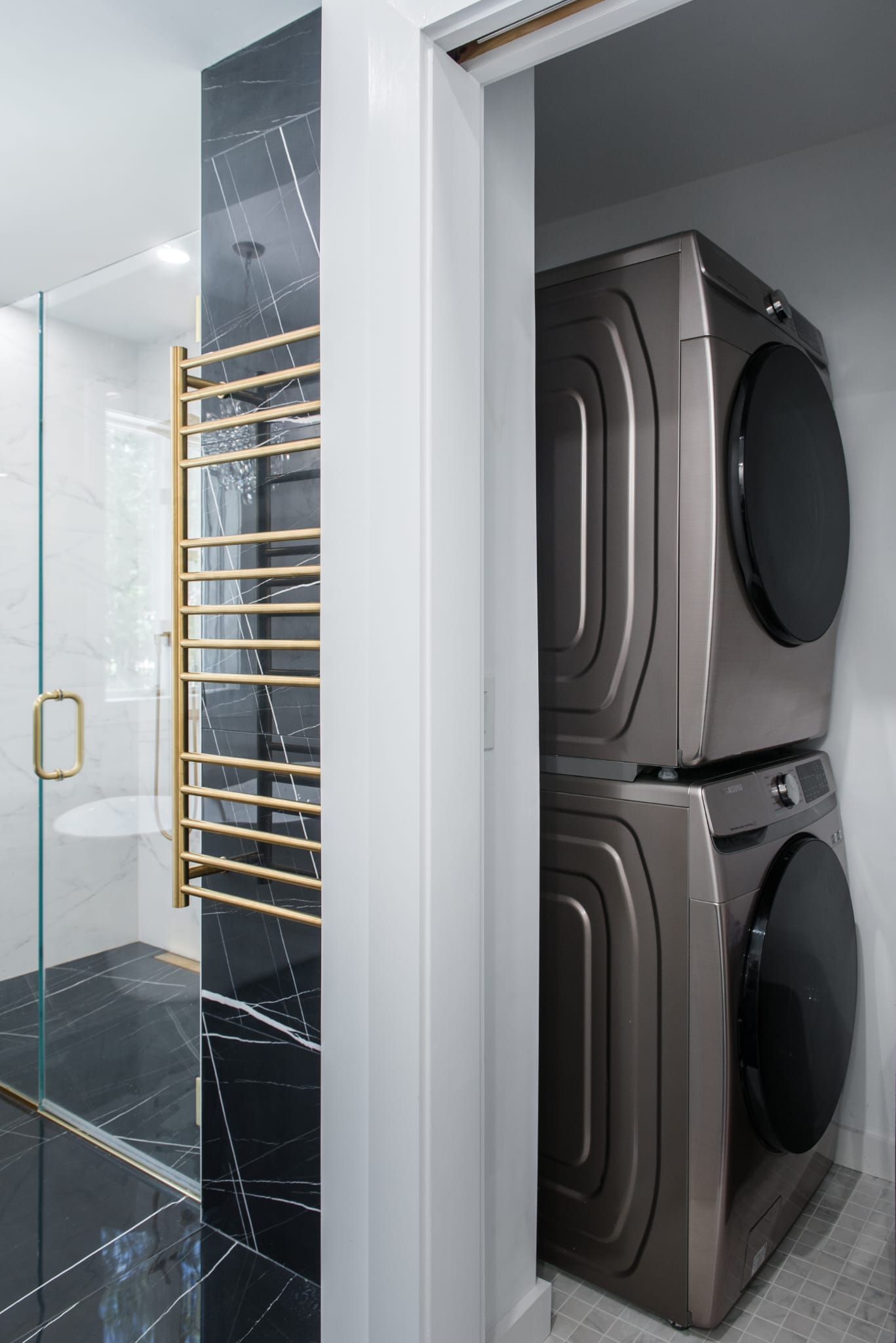
Moving Your Laundry Room Upstairs: A Small Change That Makes Everyday Life Easier
If you’ve ever carried a heavy basket of laundry up and down the stairs—multiple times a week—you already know how frustrating it can be.
For many homeowners, especially busy families, laundry isn’t just a chore—it’s a constant interruption. Clothes pile up in bedrooms, baskets sit in hallways, and the simple act of getting through a few loads turns into a back-and-forth routine that eats up time and energy.
That’s why moving the laundry room closer to the bedrooms—right where the clothes actually are—can feel like a game-changing upgrade.
But while the idea is simple, doing it right takes thoughtful planning—and the right approach to how your home is designed.
Space and Layout Considerations

In most homes, creating an upstairs laundry means repurposing space—often a hallway closet or a portion of a bedroom. At first, giving up storage can feel like a drawback. But in practice, many homeowners find that the convenience far outweighs the trade-off.
Instead of laundry piling up in multiple rooms, everything has a place. No more baskets sitting in corners or clothes waiting to be carried downstairs.
The key is designing the space to actually function well—integrating storage, allowing proper clearances, and making sure it feels like part of the home, not something forced in after the fact.
Projects like this are often part of a larger renovation, where layout changes are planned together to improve how the home works as a whole. You can learn more about how we approach these types of updates on our home renovation contractors in Westchester County page.
Plumbing and Venting Considerations
Plumbing and Venting Considerations
While the day-to-day benefit is convenience, behind the walls there’s more happening.
Water supply lines, drainage, and venting all need to be extended to the new location. Positioning the laundry area near existing plumbing—like a bathroom—can simplify the process significantly and reduce unnecessary complexity.
In many homes, these changes tie directly into bathroom systems, which is why laundry relocations are sometimes coordinated alongside bathroom remodeling projects to streamline plumbing and overall layout.
Dryer venting is another key factor. The system needs a clear and efficient path to the exterior to ensure proper airflow and long-term performance.
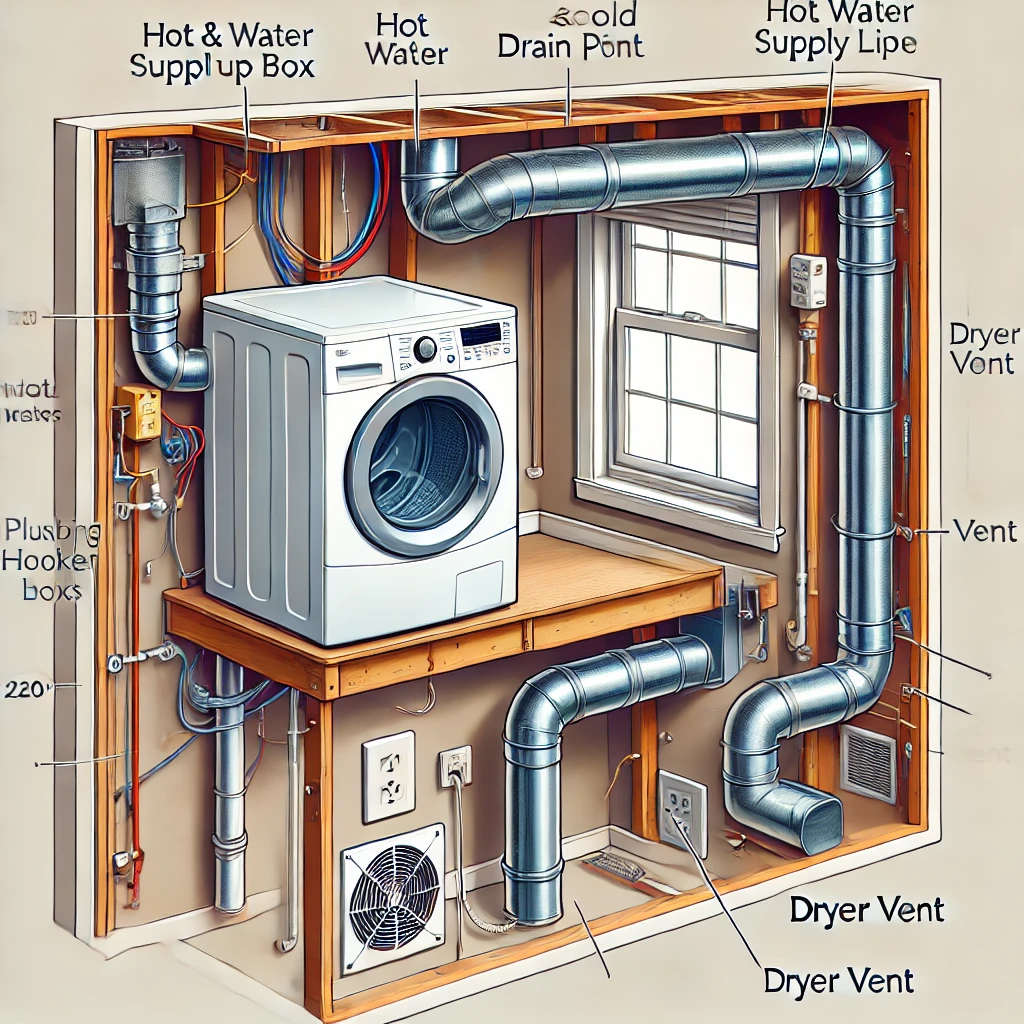
Dryer venting is another crucial factor. A dryer (unless you choose a ventless model) must exhaust hot, moist air outside. That means running a duct from the dryer’s location to an exterior vent outlet – either through an exterior wall or up into the attic and out through the roof. Shorter, straight runs are best to ensure efficient airflow and reduce lint buildup. If the new laundry space is against an exterior wall, venting is straightforward; if it’s more central, it might require a longer duct or creative routing between floor joists. Venting safety is paramount – we ensure you have a smooth metal duct (not flimsy plastic hose) and an accessible outside vent cap that can be cleaned of lint regularly.
What about the dryer fuel source?
Electrical and Appliance Considerations
Relocating laundry also brings up practical decisions about appliances.
If your current setup uses a gas dryer, extending that line upstairs can be complex and invasive. For that reason, many homeowners choose to switch to an electric dryer, simplifying installation while still meeting everyday needs.
Electrical capacity should also be evaluated to ensure the system can safely support the new setup without overloading existing circuits.
Structural Support and Vibration
Structural Support and Vibration
One of the most common concerns is whether the upstairs floor can handle the weight and movement of a washer and dryer.
In most cases, standard residential construction is sufficient—but vibration during spin cycles can still be a factor, especially in older homes.
Reinforcing the floor or using vibration-dampening solutions helps ensure everything runs smoothly and quietly, so the new space feels as solid and reliable as the rest of the home.
RAJ Kitchen and Bath: Expertise from Planning to Execution
RAJ Kitchen and Bath: Expertise from Planning to Execution
Relocating a laundry room to a new floor is not just a small upgrade—it’s a coordinated effort involving layout, plumbing, electrical, and structural considerations.
At RAJ Kitchen and Bath, we handle the entire process from planning through execution, ensuring every detail is thought through and properly integrated into your home.
When projects like this are approached as part of a larger renovation plan, the result is a space that not only works—but feels like it was always meant to be there.
Ready to Get Started?
Why This Upgrade Makes Such a Difference
At its core, moving the laundry room upstairs isn’t about adding something new—it’s about removing friction from your daily routine.
It means fewer trips up and down the stairs, less clutter throughout the home, and a more efficient way to handle everyday tasks.
If you’re considering changes like this, it’s important to understand how these decisions fit into the bigger picture. You can explore how we approach full renovation projects on our home renovation services page.
See how we executed this exact transformation in two real Pelham Manor homes: Bathroom & Laundry Remodel in Pelham Manor and Laundry Room Remodel in Pelham Manor. Or explore our full bathroom remodeling services in Westchester County.”
Ready to Get Started?
If you’re tired of the constant back-and-forth and wondering if this kind of upgrade could work in your home, the first step is understanding what’s possible.
Schedule a consultation and we’ll walk you through the options, the requirements, and the best way to make it work for your space.