
Pelham Manor Kitchen Remodel
When we first met our client, the kitchen wasn’t introduced as a problem to solve. It was introduced as something to preserve.
The lower cabinets were failing and needed replacement, but the uppers were off limits. Her father had built the original kitchen himself shortly after she purchased the home, and the space carried personal meaning that went far beyond layout or finishes.
This wasn’t a client looking for a new look. She was looking to protect something familiar.
The initial goal was modest: stabilize what was failing, interfere as little as possible, and extend the life of a kitchen that already mattered.


Where It Began
On paper, the plan made sense. Replace the base cabinets, leave everything else intact, and move quickly.
But once we began studying the layout and understanding how the kitchen was actually used, it became clear the existing footprint was working against her. This was a high-use kitchen owned by someone who bakes often and relies heavily on prep space, storage, and clear circulation.
A limited update would solve one problem while leaving several others untouched.
When the Plan Changed
After reviewing the constraints of the existing layout — and after getting approval from her father — the project shifted direction.
Walls were removed.
All cabinetry was taken down.
The kitchen remained in the same location, but its organization and flow were completely rebuilt.
The challenge wasn’t square footage. It was figuring out how to make the space work harder without making it feel crowded.
Storage, Workflow, and Everyday Use
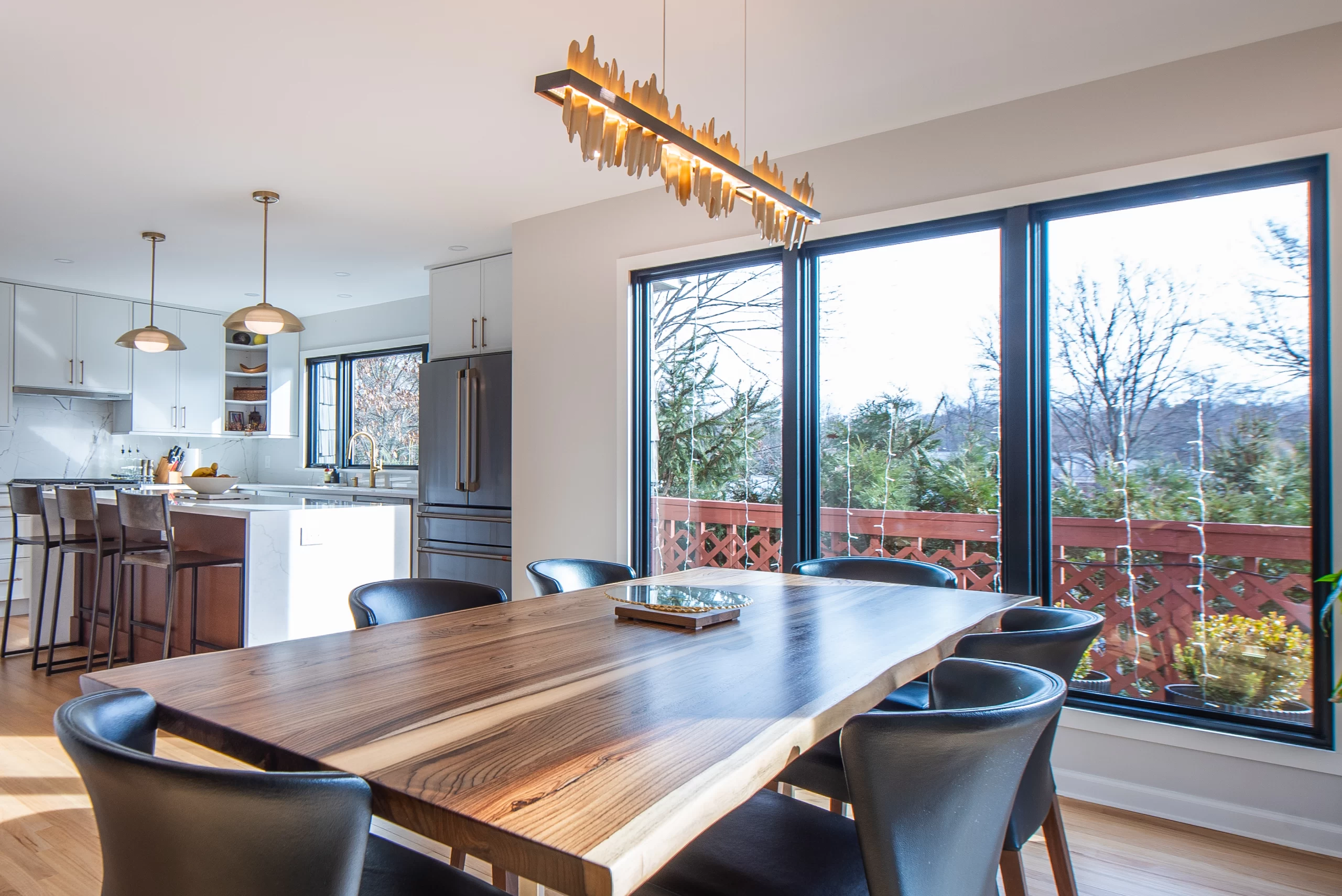
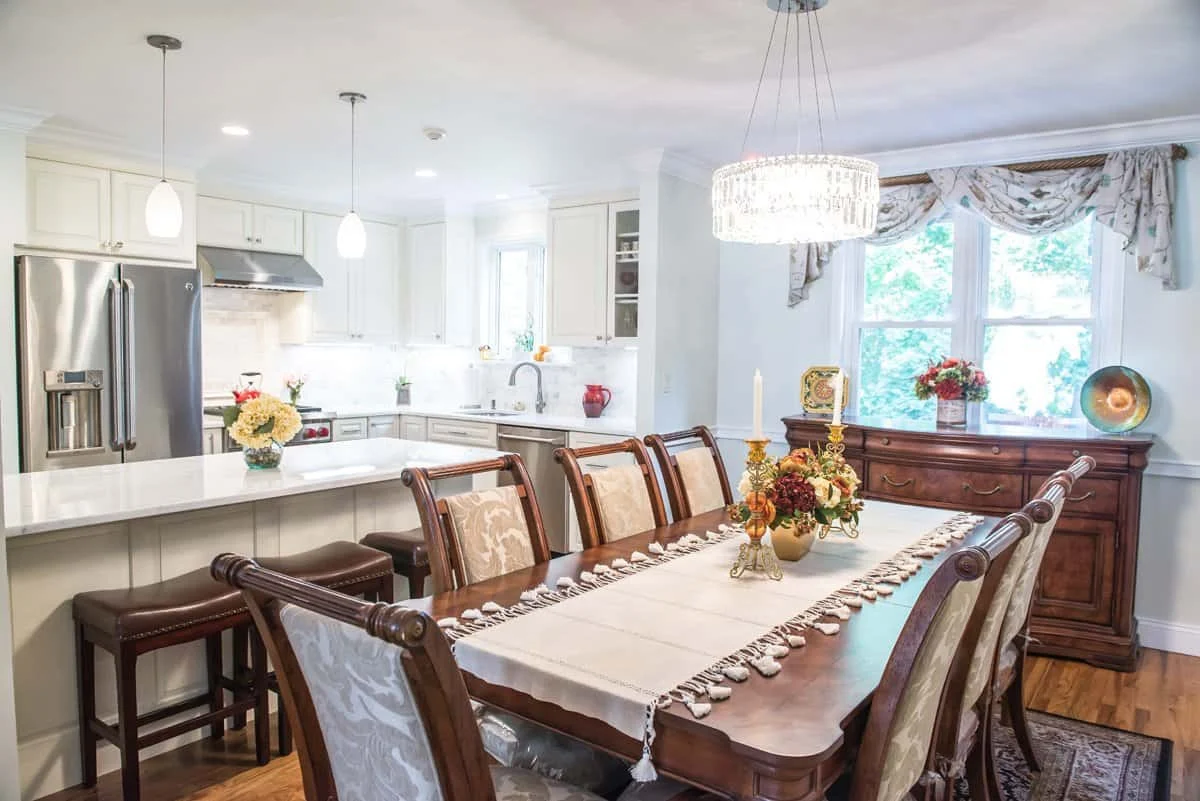
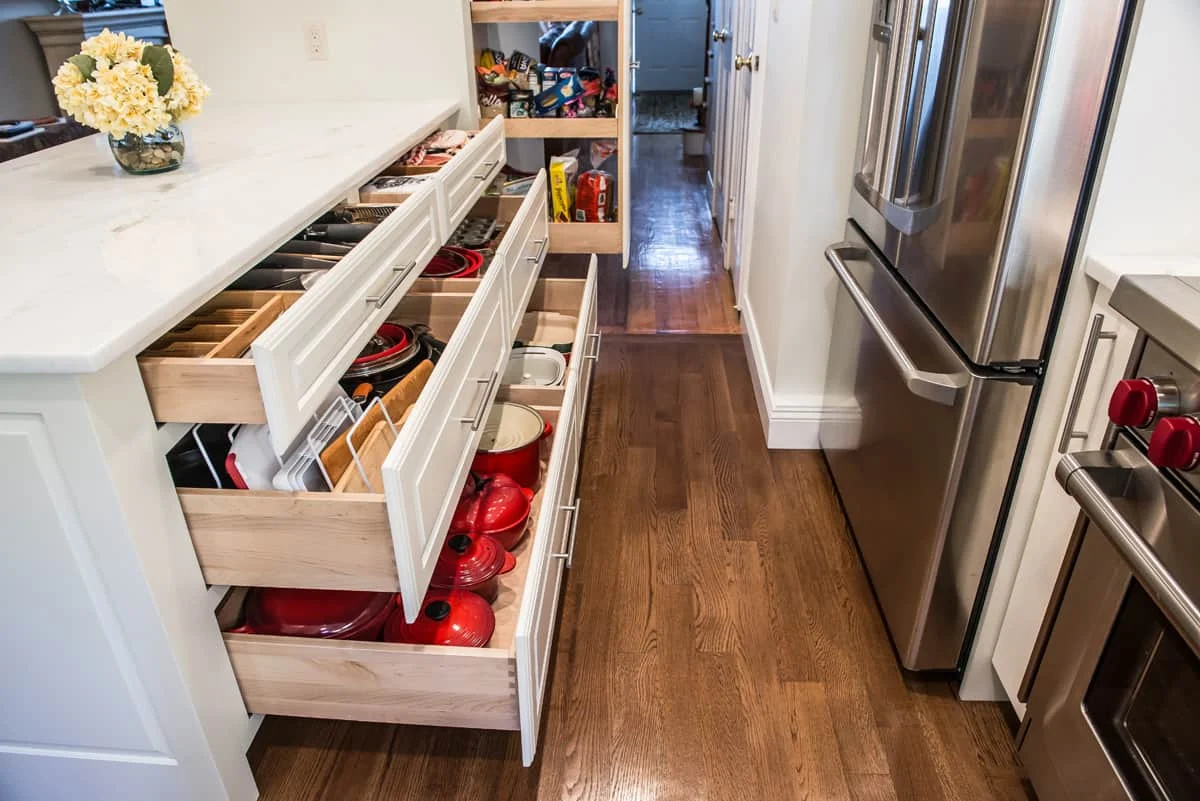
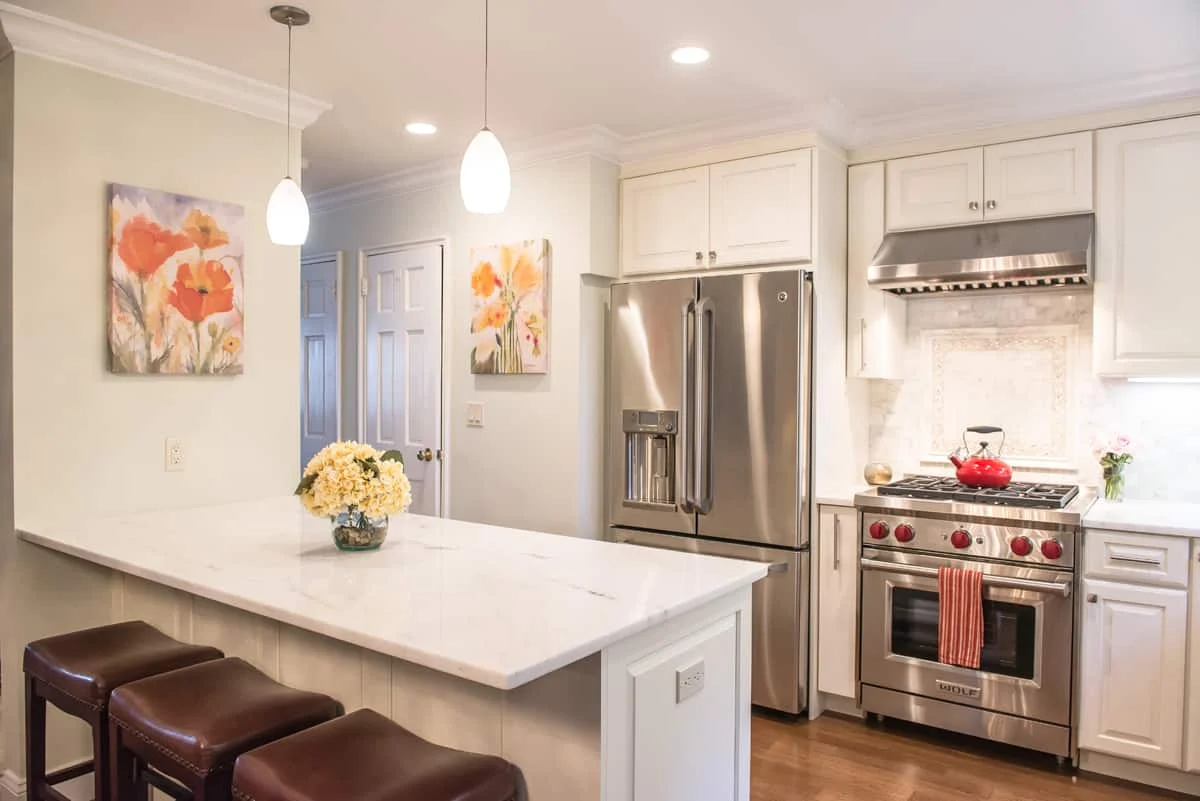
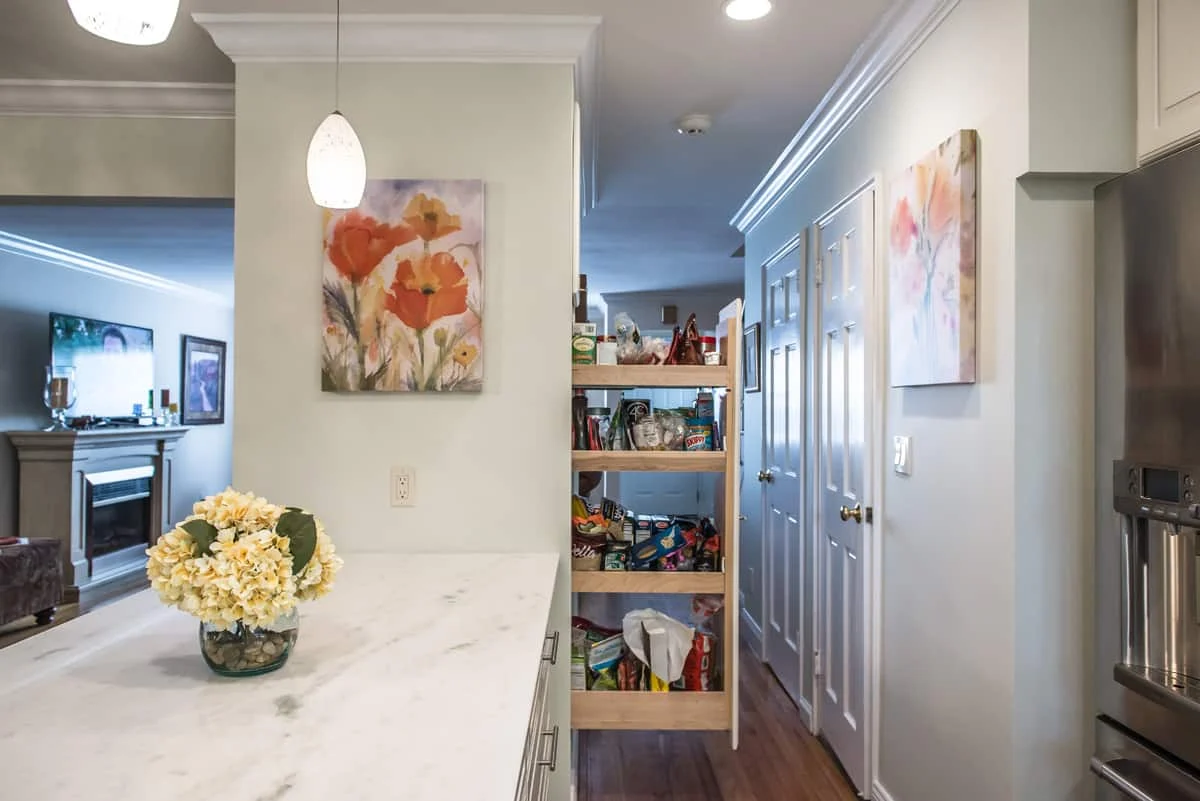
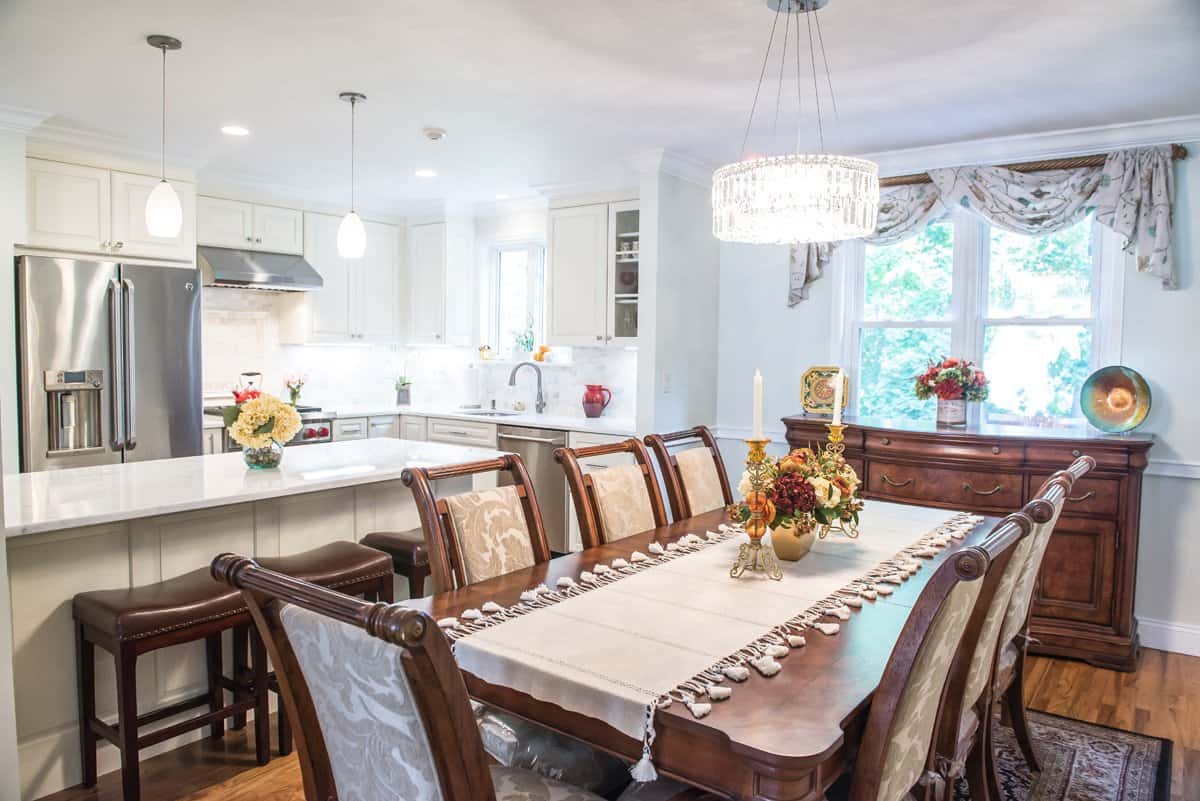
The redesign centered around a large island that anchors the room. It provides generous prep space for baking, creates seating from the dining room side, and helps organize circulation without closing the space off.
Storage was planned around daily habits rather than standard layouts. A dual-bin recycling system was designed to function independently and placed precisely where plumbing and electrical allowed, freeing up valuable cabinet space elsewhere.
Every element had to earn its place.




Ventilation and the Hidden Microwave Solution
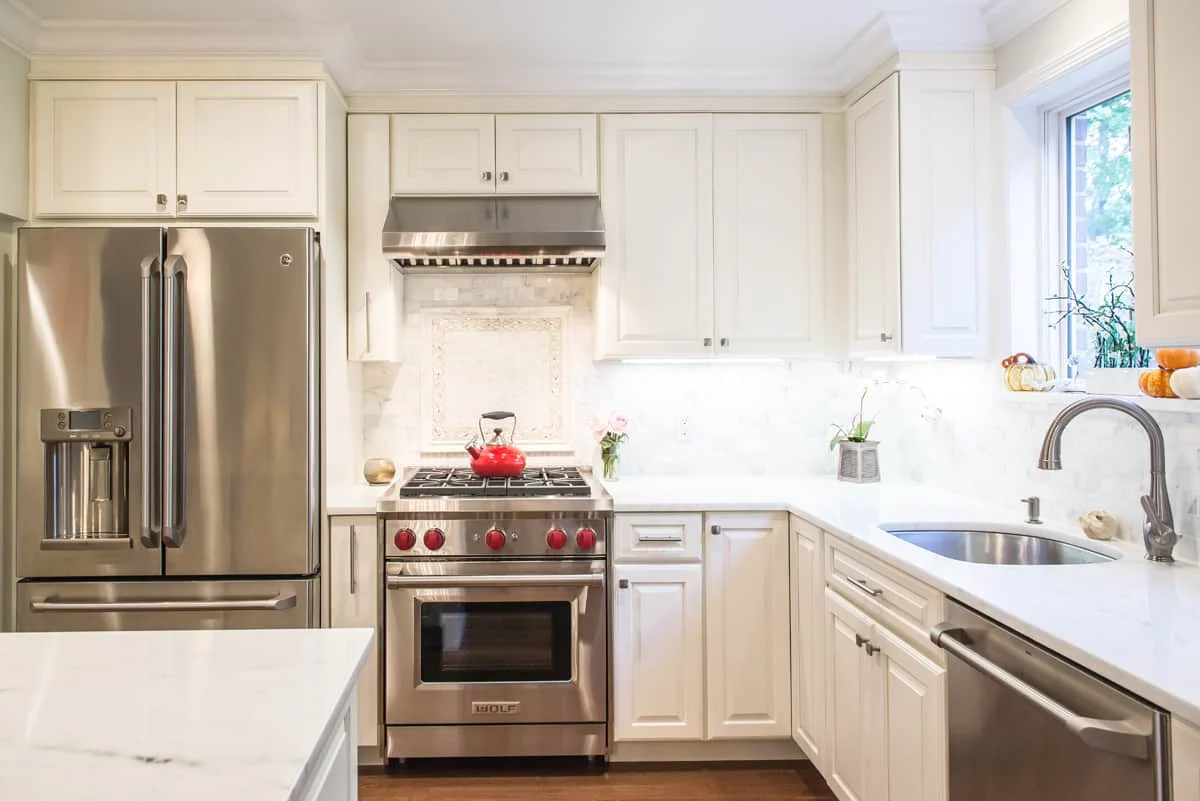
An over-the-range microwave was never an option. This kitchen needed serious ventilation to handle heat and grease from frequent cooking.
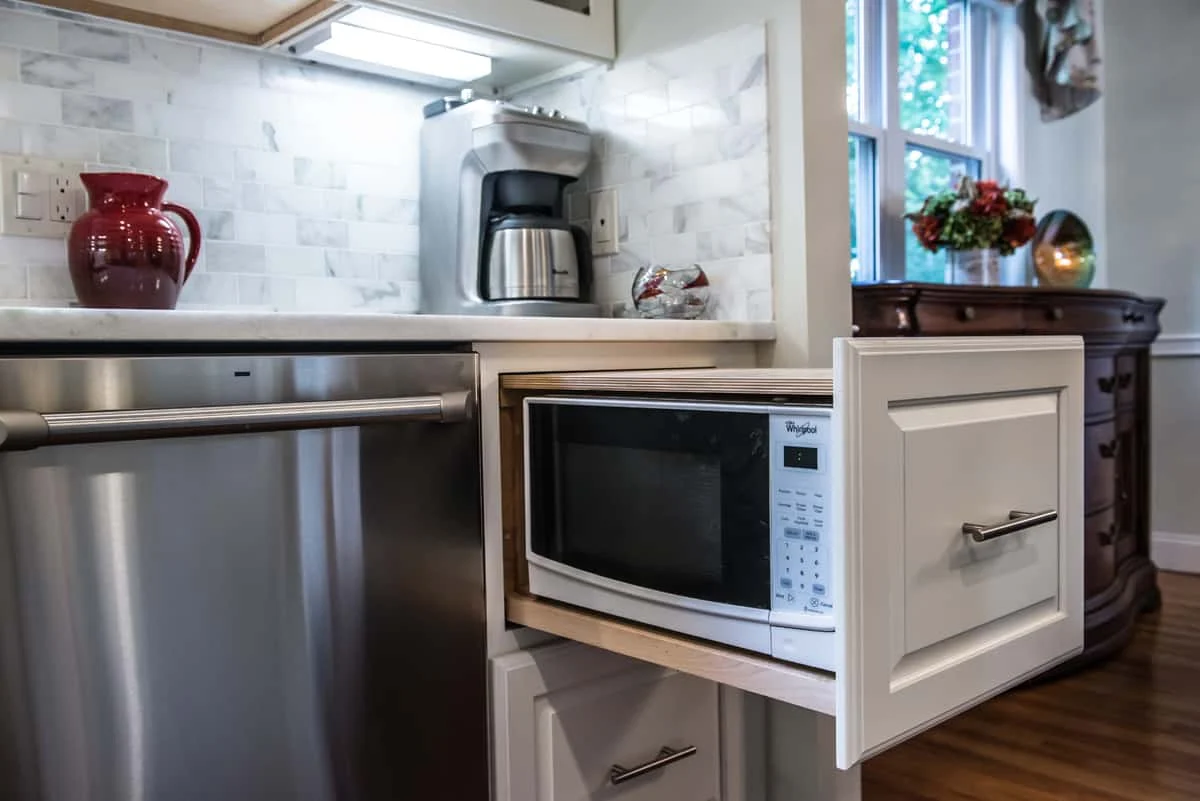
To solve this, we installed a high-powered vent system and relocated the microwave entirely. The top drawer of a base cabinet was converted to house a standard off-the-shelf microwave, finished with a butcher block surface above.
When open, the drawer doubles as usable counter space — practical, efficient, and completely out of sight when not in use.
The Finished Space
The final design balances detail and restraint.
Raised-panel cabinetry, layered whites, detailed moldings, and quartzite countertops bring depth to the space without overpowering it. Lighting was used to define zones and highlight work areas rather than act as decoration.
The result is a kitchen that feels solid, functional, and built to last.
The Outcome
This project wasn’t about starting over. It was about improving performance without erasing what came before.
The kitchen now supports how the homeowner cooks and lives on a daily basis, with better flow, more usable storage, and a layout that finally works with the space instead of against it. Every adjustment was made with restraint, keeping the kitchen in its original location while allowing it to function at a much higher level.
What began as a request to replace failing cabinets evolved into a complete reworking of the room — one that respected the original build while addressing the realities of how the space is used today. The result feels settled, practical, and built to last.
Projects like this are a reflection of how we approach kitchen remodeling in Pelham Manor, NY, and across Westchester County — thoughtful, measured, and driven by how the space needs to perform.
Client happy.
Father approved.
On to the next.