
Project Description
Modern Transitional Kitchen Remodel: Where Clean Lines Meet Classic Form
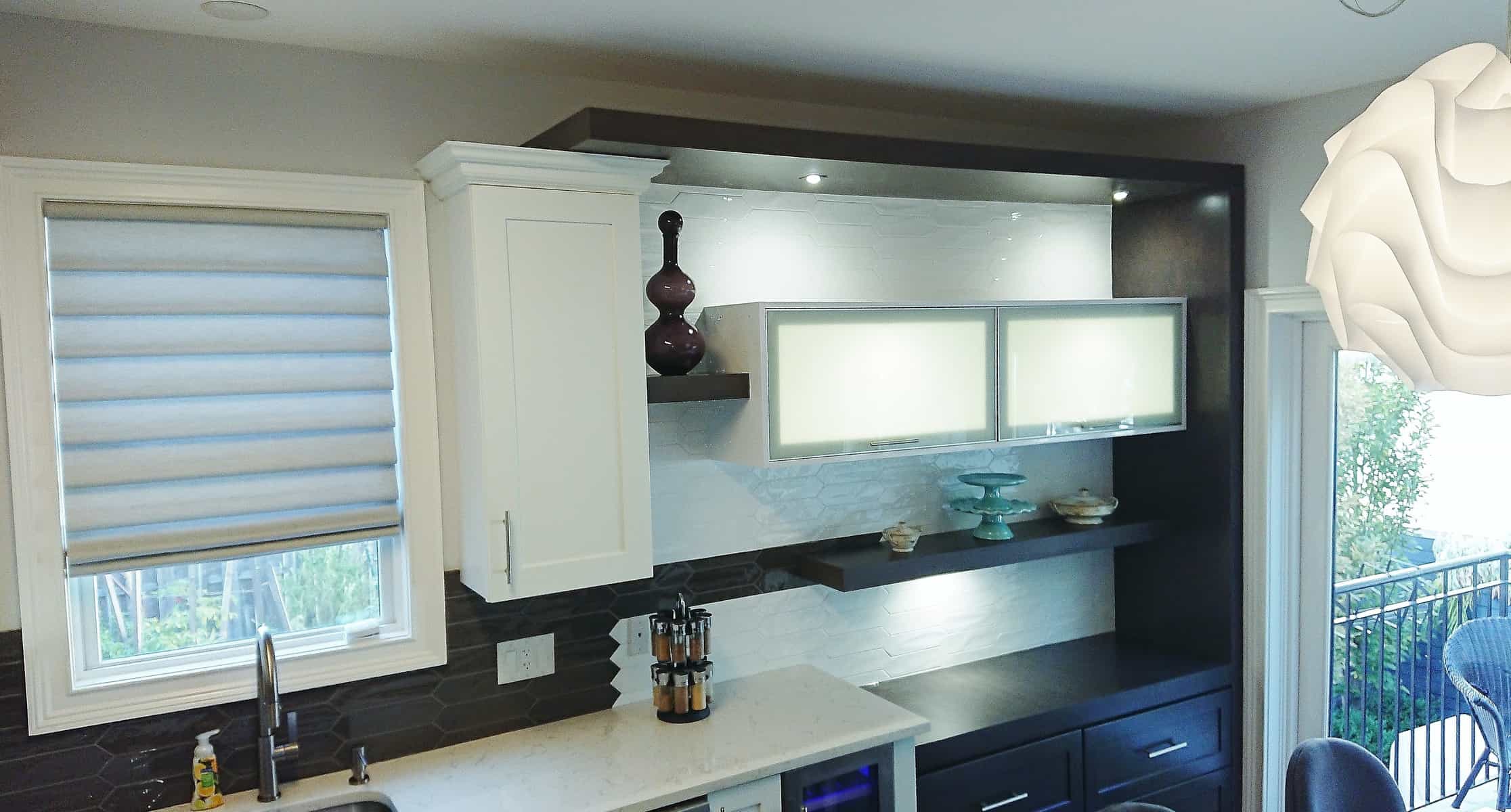
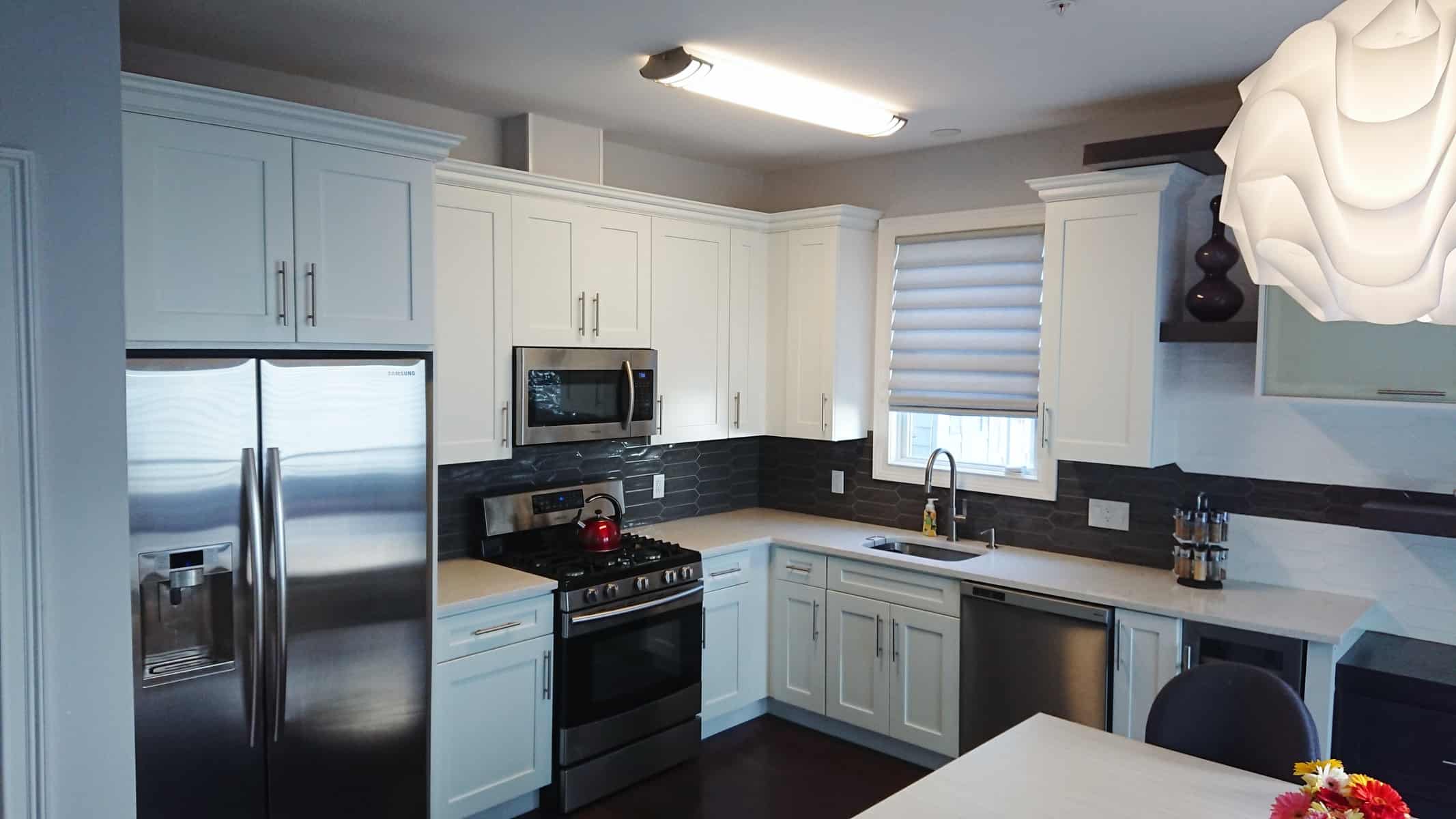
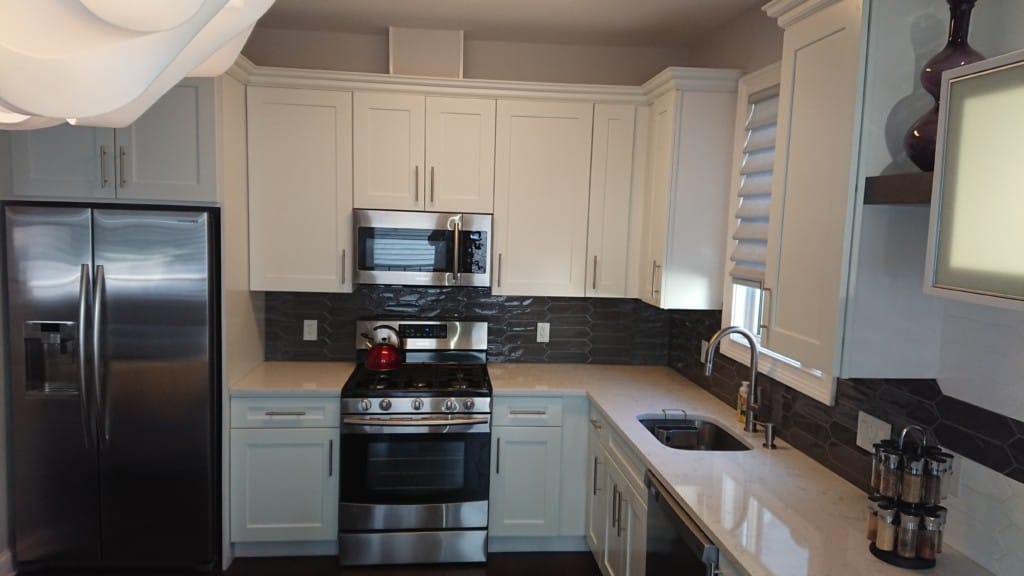
There are kitchens that lean firmly into one design language—and then there are kitchens that live in the tension between two worlds. This project was not about choosing modern or traditional. It was about balance.
The homeowners loved the clarity of contemporary design—the flat planes, the restraint, the simplicity. But they were not ready to abandon warmth, proportion, and subtle detailing. The goal became clear: create a modern transitional kitchen remodel that felt current without feeling cold, structured without feeling rigid.
Blending two styles requires more than mixing finishes. It requires discipline. Every cabinet line, material choice, and visual break had to support both directions at once.
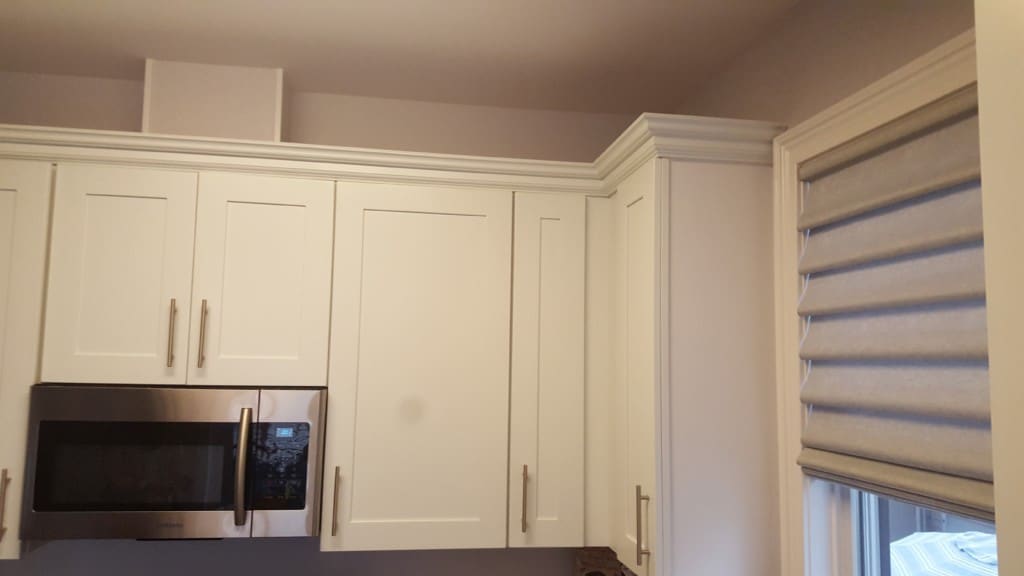
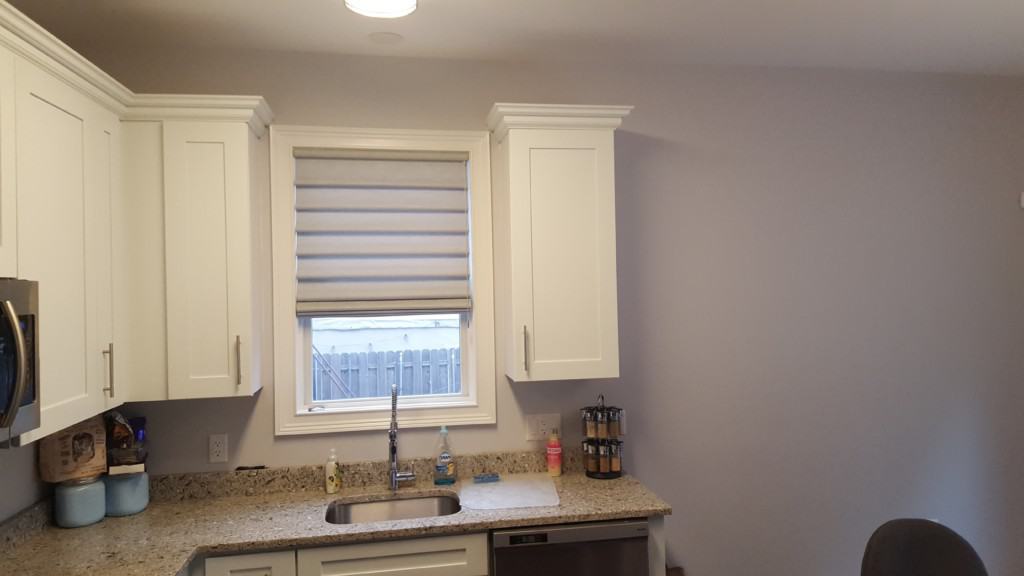
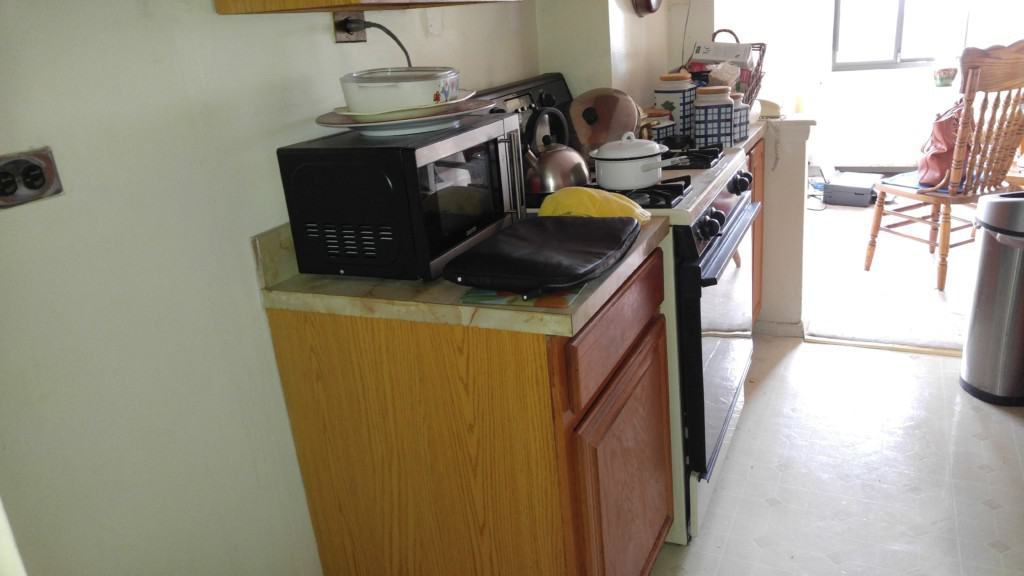
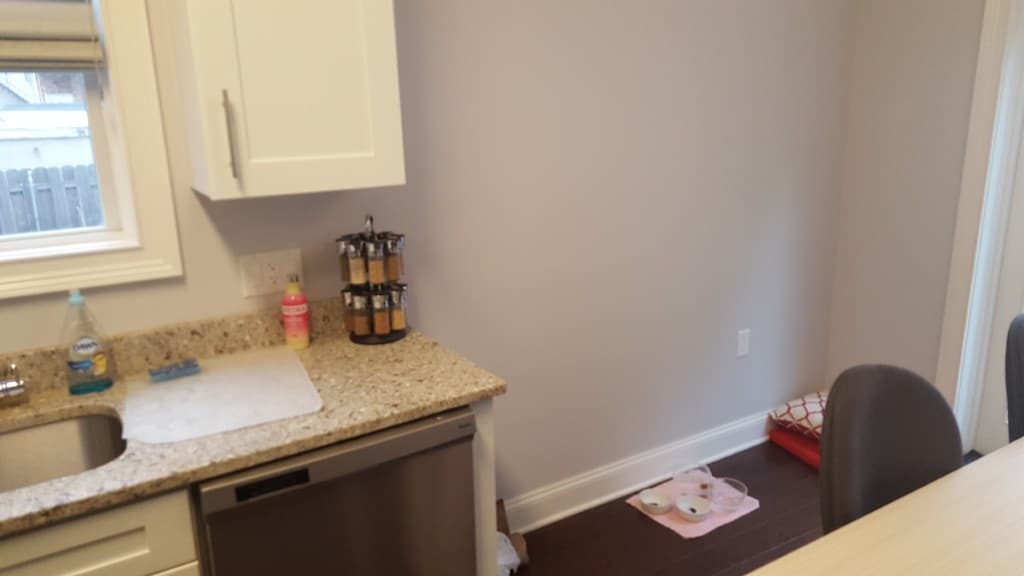
“BEFORE” PHOTOS:
Understanding Modern Transitional Design
Modern transitional design is not a trend. It is a calibrated midpoint.
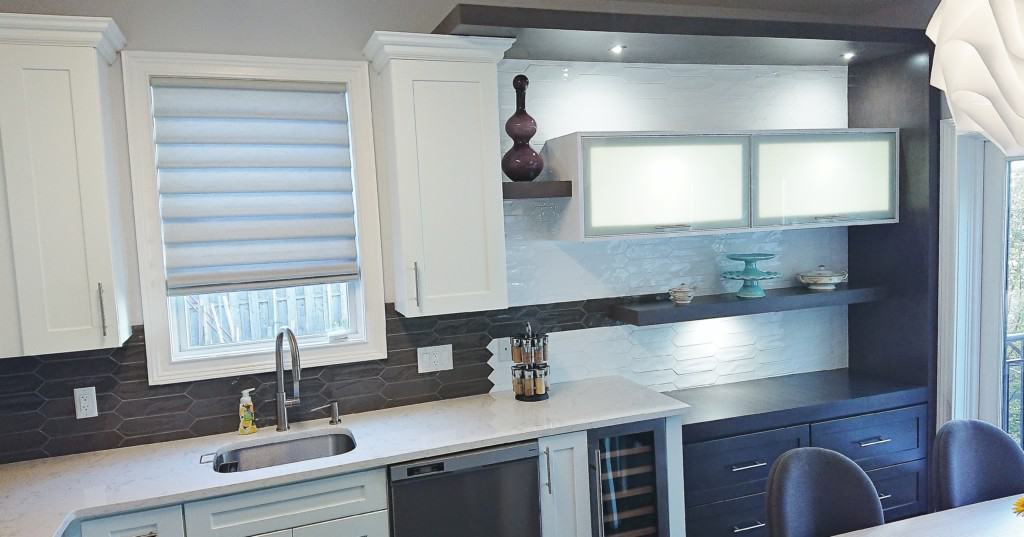
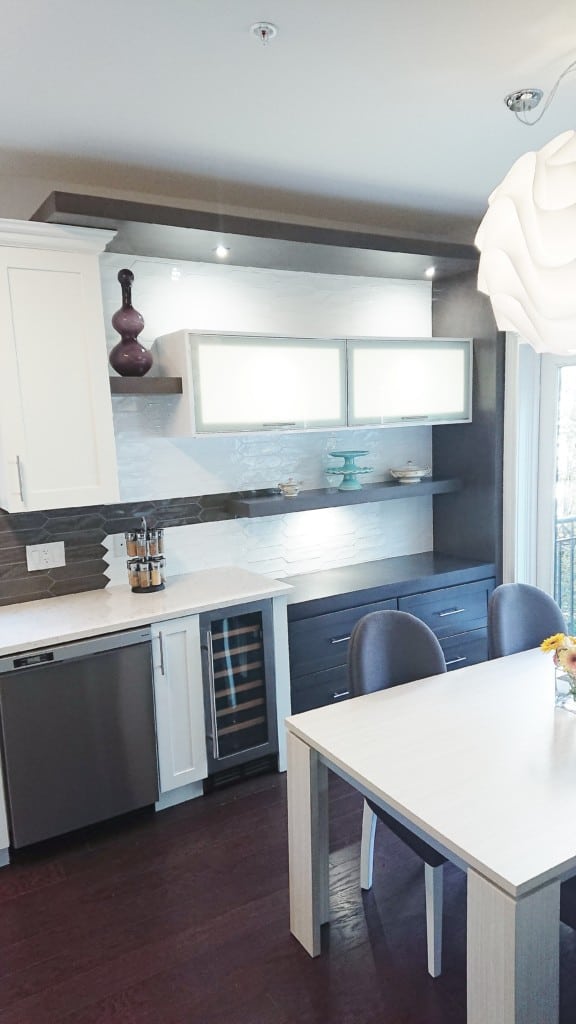
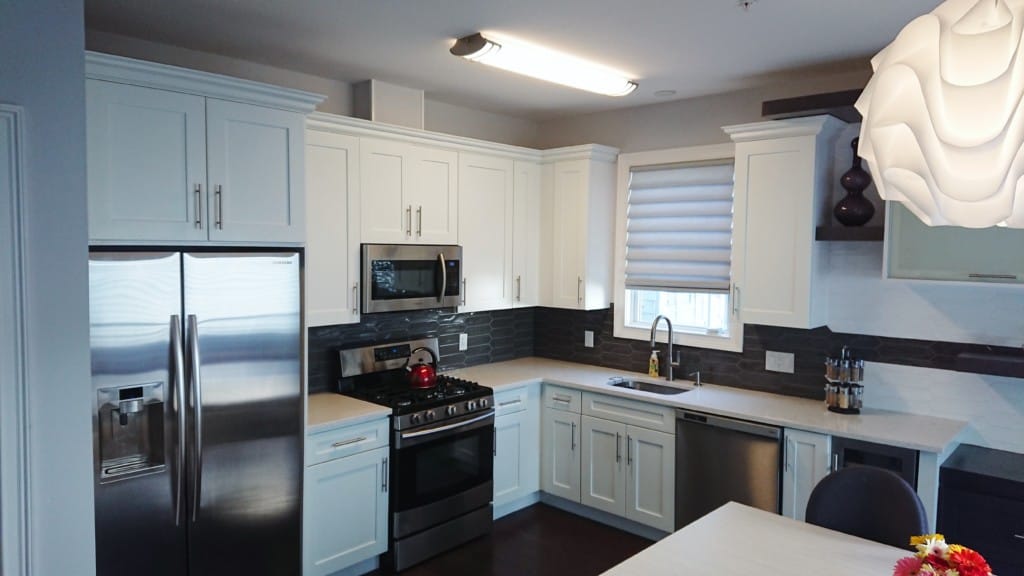
Where contemporary kitchens eliminate ornament, transitional kitchens soften edges. Where traditional kitchens layer molding and detail, modern design reduces to structure and proportion. The success of this remodel came from controlling contrast—allowing modern cabinetry to sit comfortably within a more classic spatial rhythm.
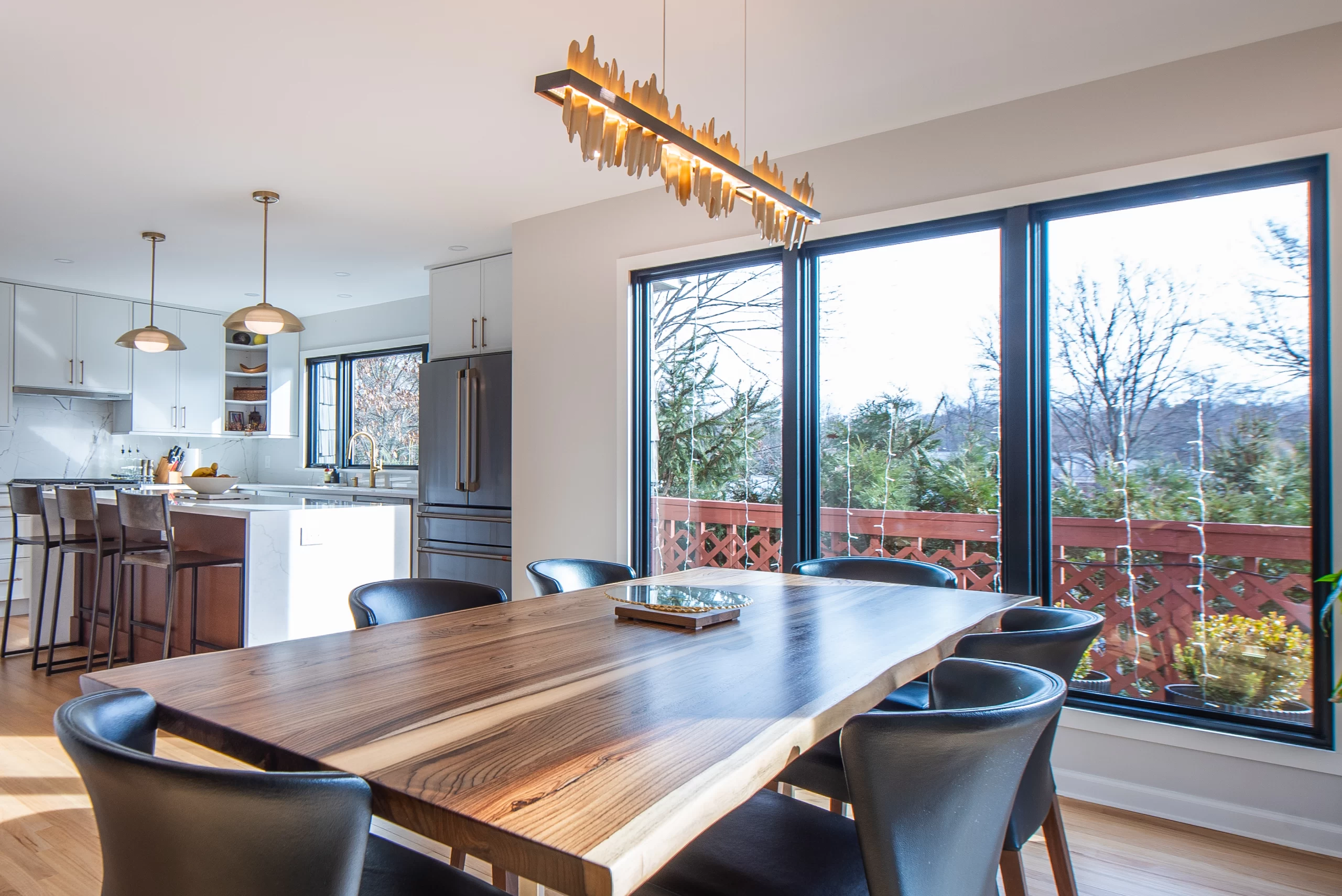
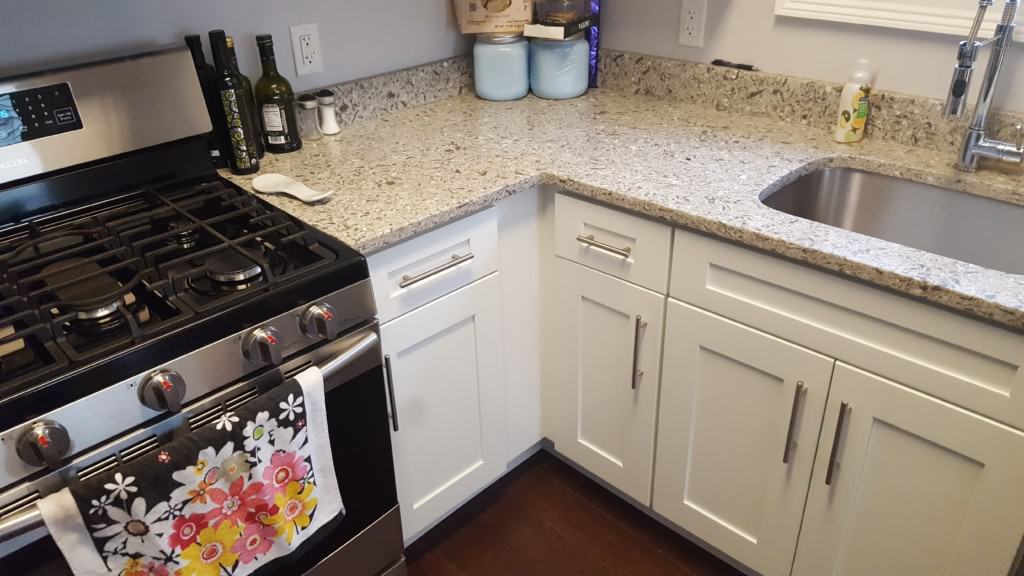
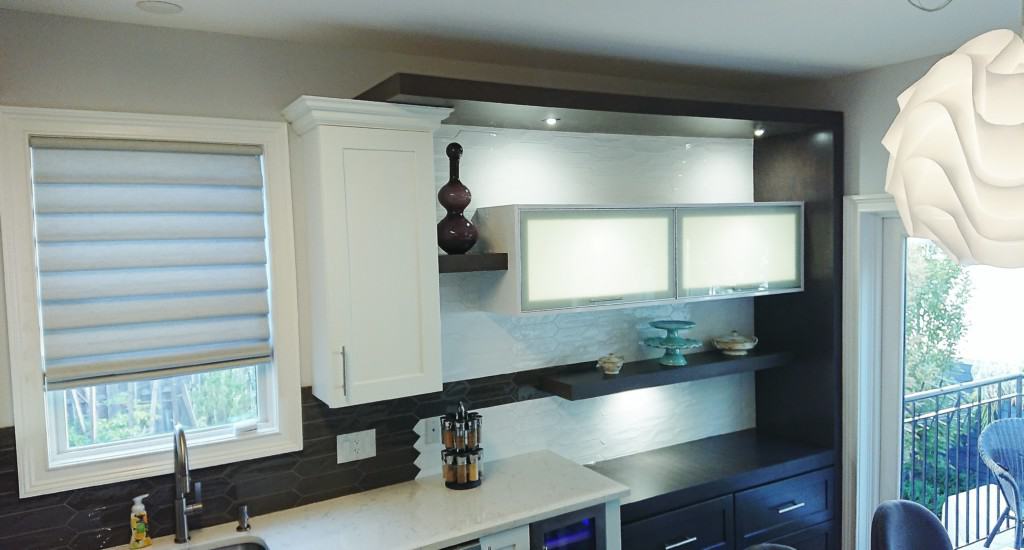
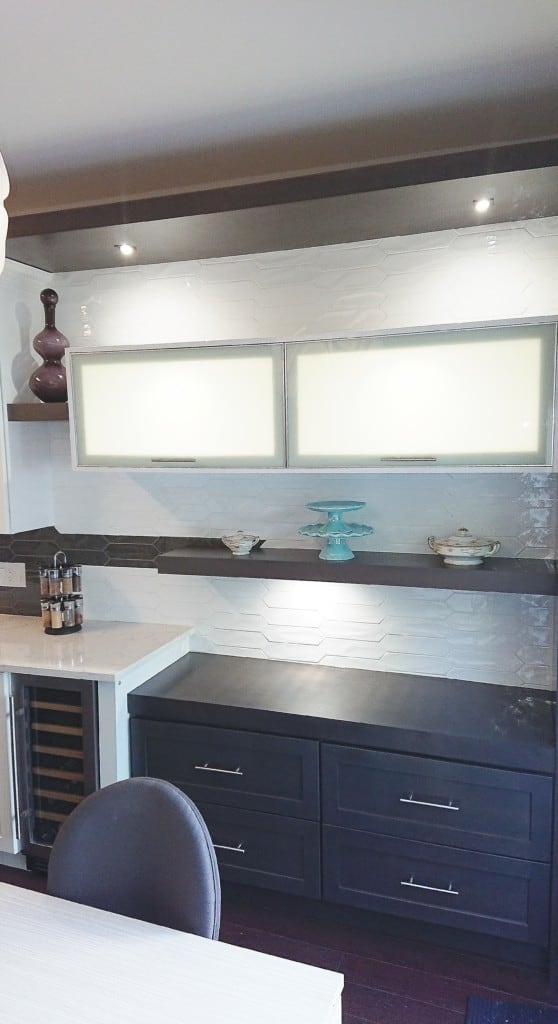
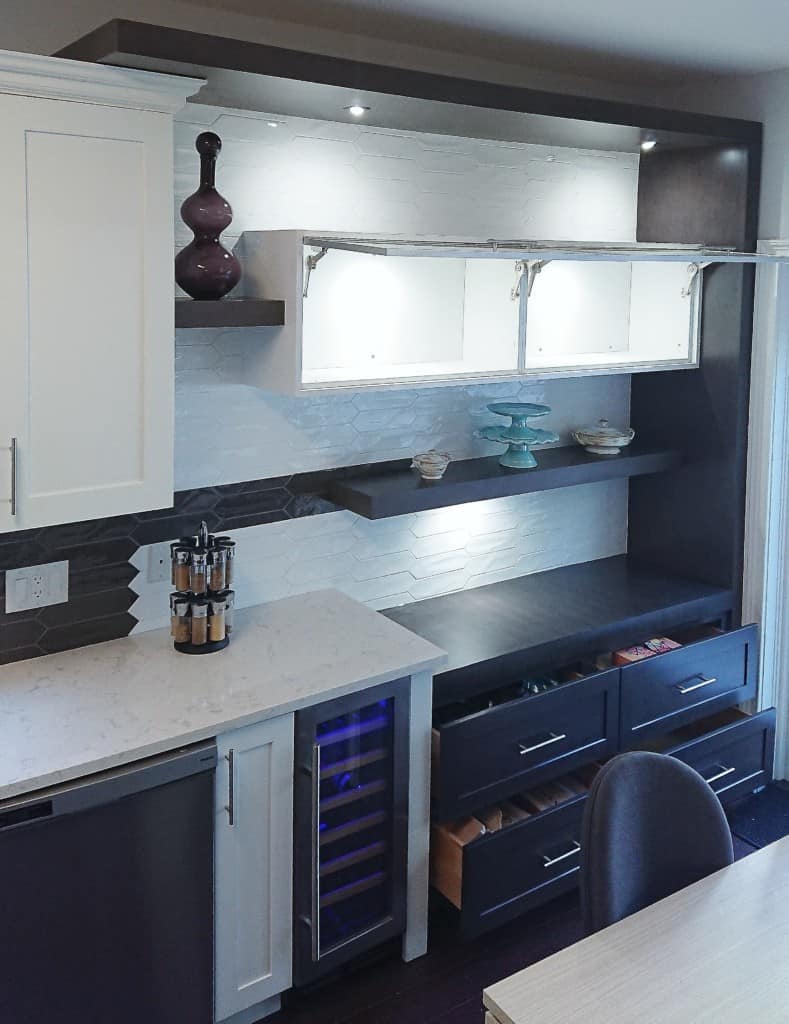
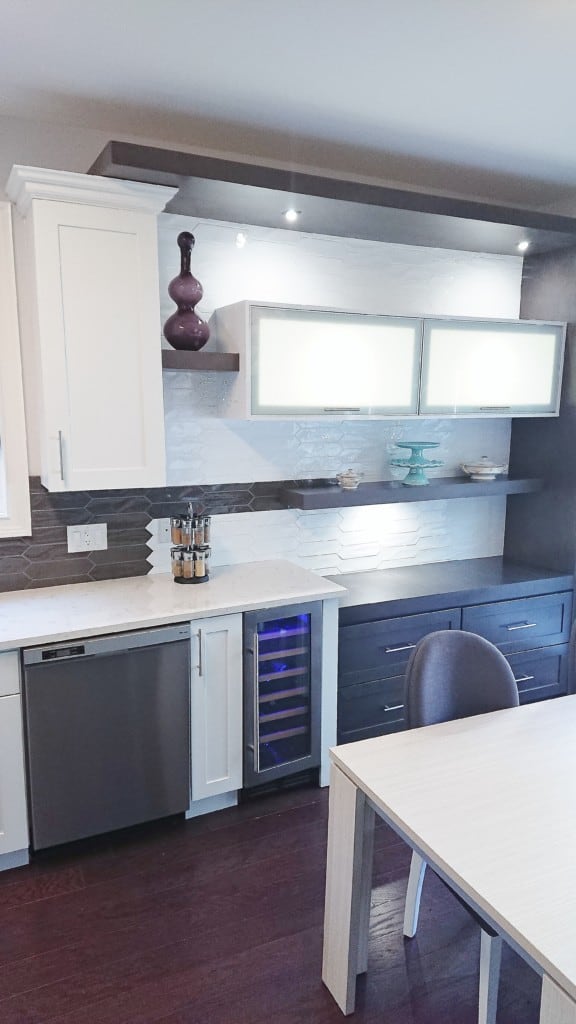
The cabinetry profile remained clean and linear. The hardware introduced subtle warmth. The lighting avoided excess but provided depth. Nothing shouted. Everything worked together.
Cabinetry as the Anchor
In a kitchen that merges design languages, cabinetry must lead.
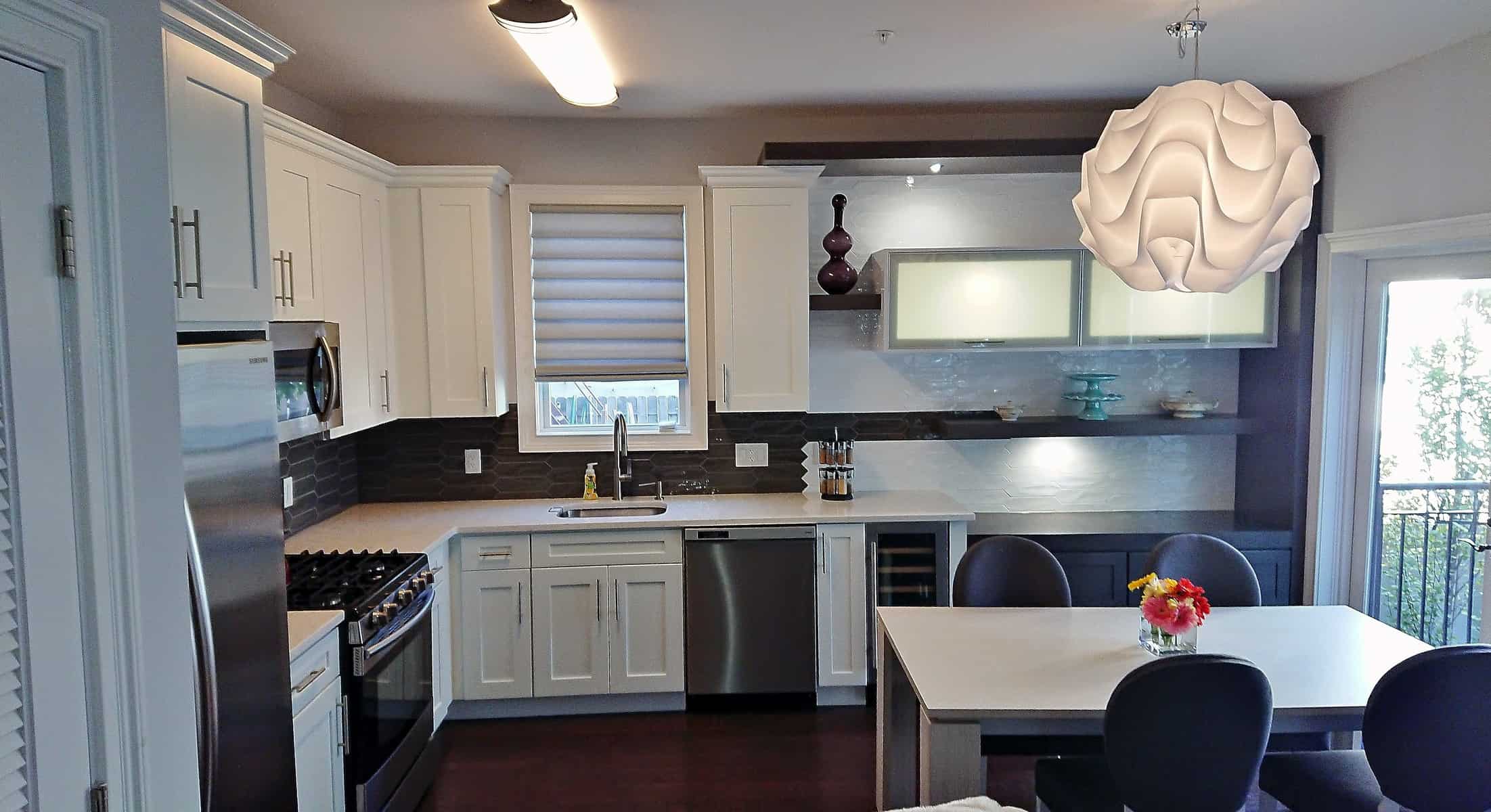
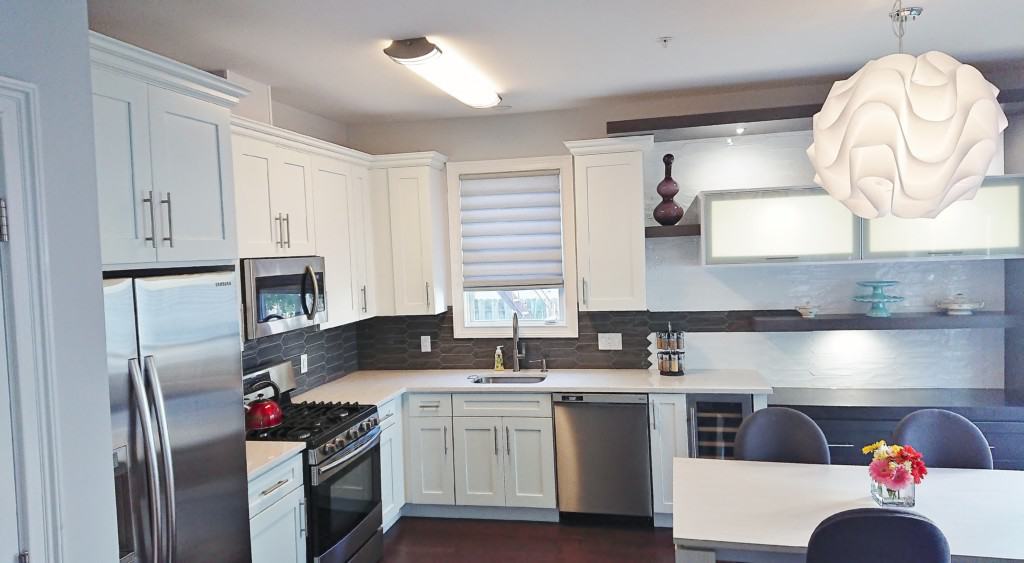
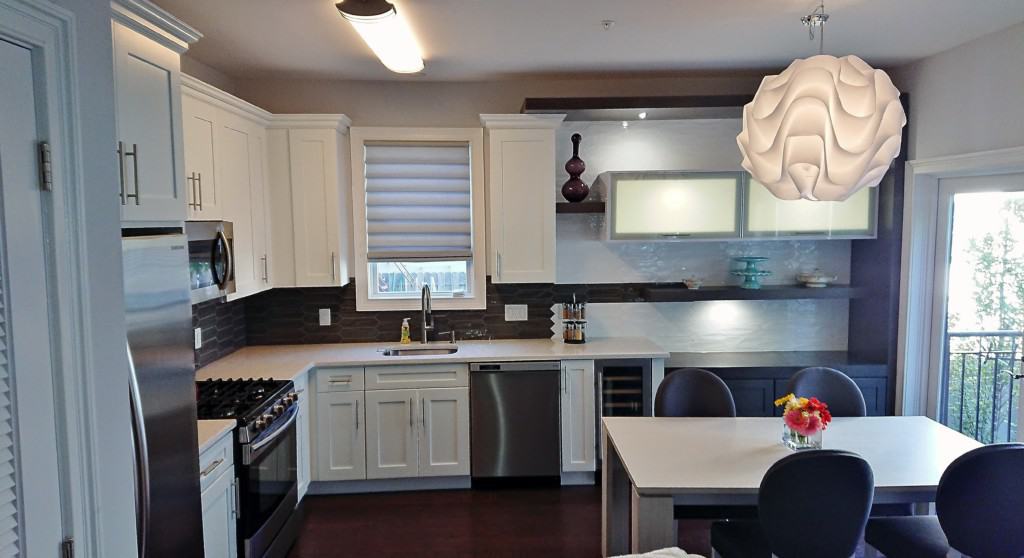
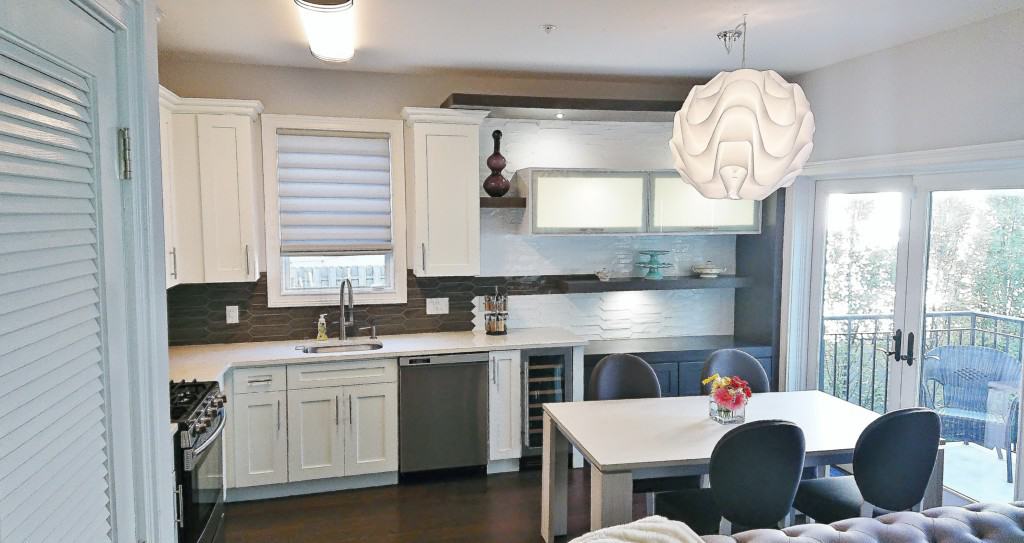
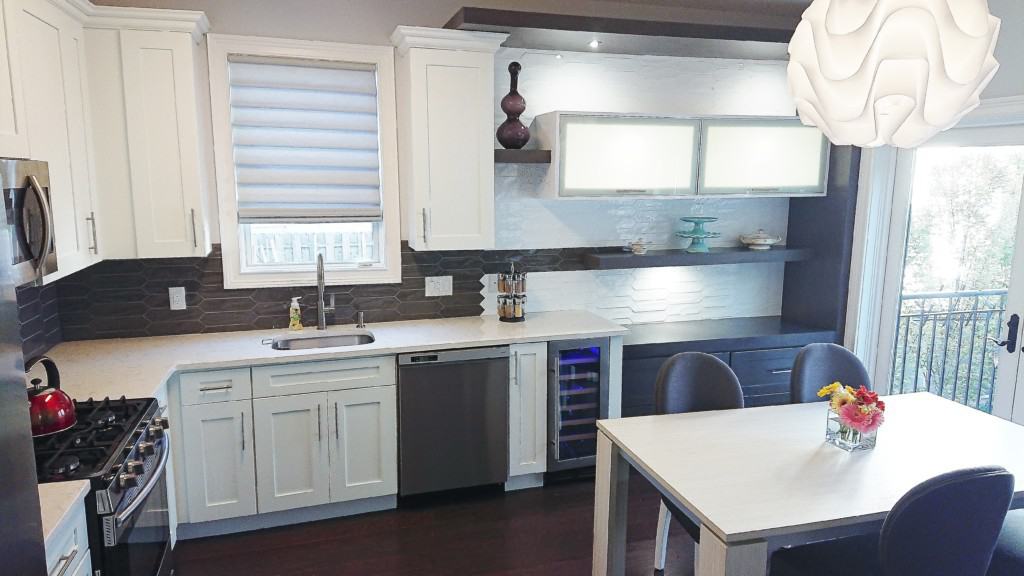
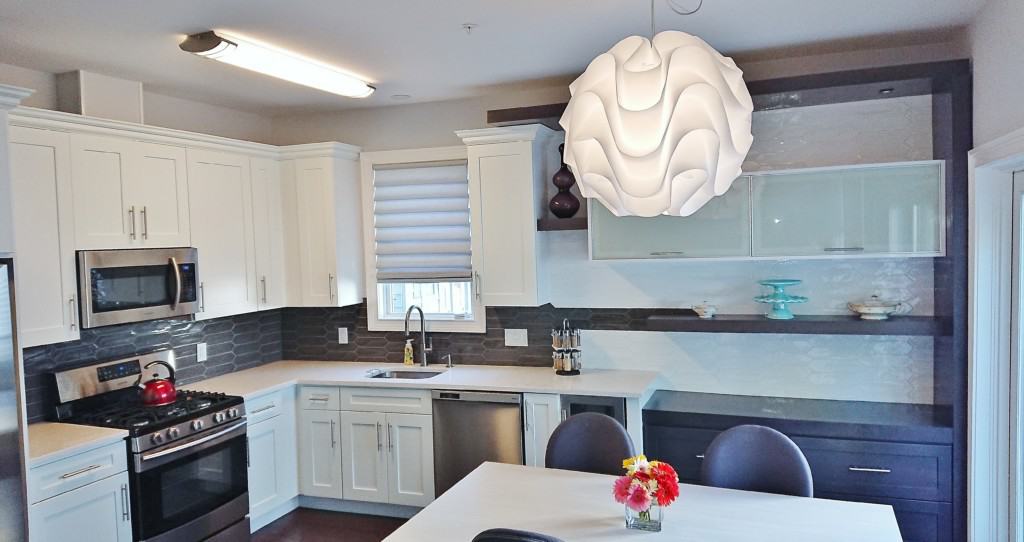
Here, the cabinet layout maintains strong horizontal and vertical alignment—an unmistakably modern move. Yet the finish and proportions prevent the space from feeling stark. The balance between upper and lower cabinetry avoids heavy crown details while still respecting traditional scale.
This is where many blended kitchens fail: they either overdecorate or over-simplify. This project held the line.
Controlling Contrast
Blending styles requires contrast control:
• Light vs. dark
• Matte vs. subtle sheen
• Linear vs. framed
Rather than stacking competing statements, we allowed one strong gesture per zone. The backsplash remains disciplined. The countertop provides continuity. The appliances integrate instead of dominate.
When two design styles coexist successfully, it’s because restraint wins over trend.
Layout Integrity
No matter the style direction, layout is king.
The working triangle remains efficient. Circulation flows naturally. Storage does not compromise aesthetics. The modern transitional look is supported by real function—not surface updates.
This reinforces an important truth: design language must follow structure, not override it.
Why This Style Appeals to High-End Buyers
Modern transitional kitchens attract discerning homeowners because they:
• Age well
• Avoid trend fatigue
• Feel current without becoming dated
• Blend into both older and newer homes
For homeowners investing $75K+ in a remodel, longevity matters. This design direction protects that investment.
The Subtle Details
The difference between “blended” and “confused” is detail discipline.
Lighting fixtures were selected to echo modern simplicity while maintaining warmth. The window treatments avoided heavy traditional layering. Appliance integration supports clean sightlines.
When merging styles, restraint is the luxury.
In Closing
This project demonstrates what happens when design is led by proportion rather than trend. A modern transitional kitchen remodel requires careful balance—something that cannot be achieved through product selection alone.
It must be engineered, proportioned, and executed with intention.
This project demonstrates how contemporary and traditional kitchen design elements can be merged into a cohesive, modern transitional space. Clean cabinet lines, controlled contrast, and balanced detailing create a kitchen that feels current yet timeless. The remodel emphasizes proportion, restraint, and long-term design integrity rather than trend-driven updates.
To see how this level of planning comes together across projects, explore our kitchen remodeling services in Westchester County.