
Traditional Cherry Kitchen Remodel in Westchester County, NY
Not every kitchen remodel needs to chase minimalism or bright white finishes. Some homes call for warmth, structure, and timeless detailing — but with modern functionality beneath the surface.
This traditional kitchen remodel centered around cherry cabinetry, granite countertops, and a strategic layout redesign. While the finishes reflect a classic aesthetic, the real transformation happened in how the space functions. Appliance placement, cabinet runs, and room boundaries were all reconsidered to improve flow, storage capacity, and daily usability.
The result is a kitchen that feels grounded, refined, and built with intention.
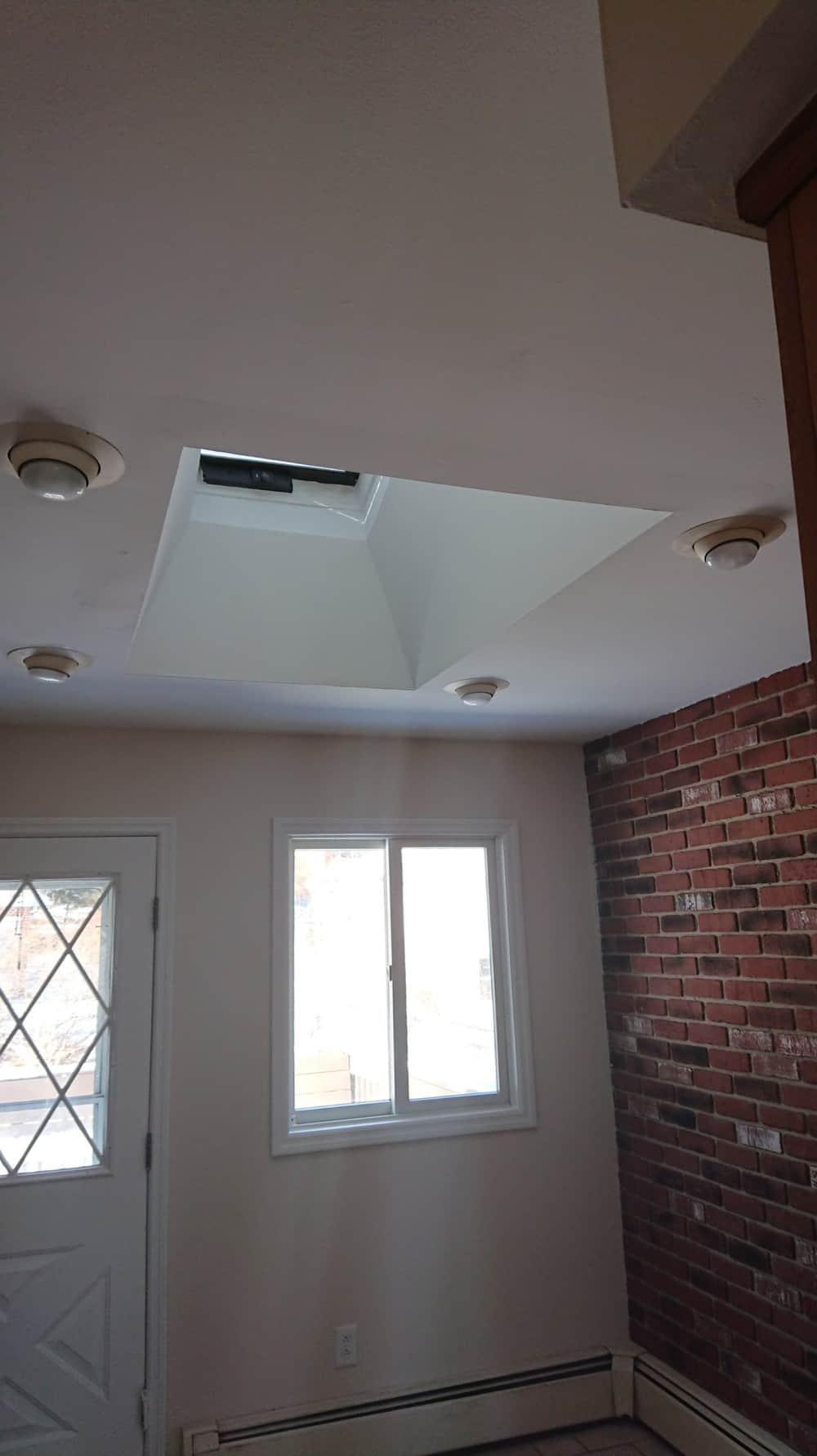
Project Scope and Construction Overview
Rethinking the Footprint to Increase Functionality
This renovation was not a simple cabinet swap. The project involved layout refinement, selective wall adjustments, appliance relocation, and storage optimization.
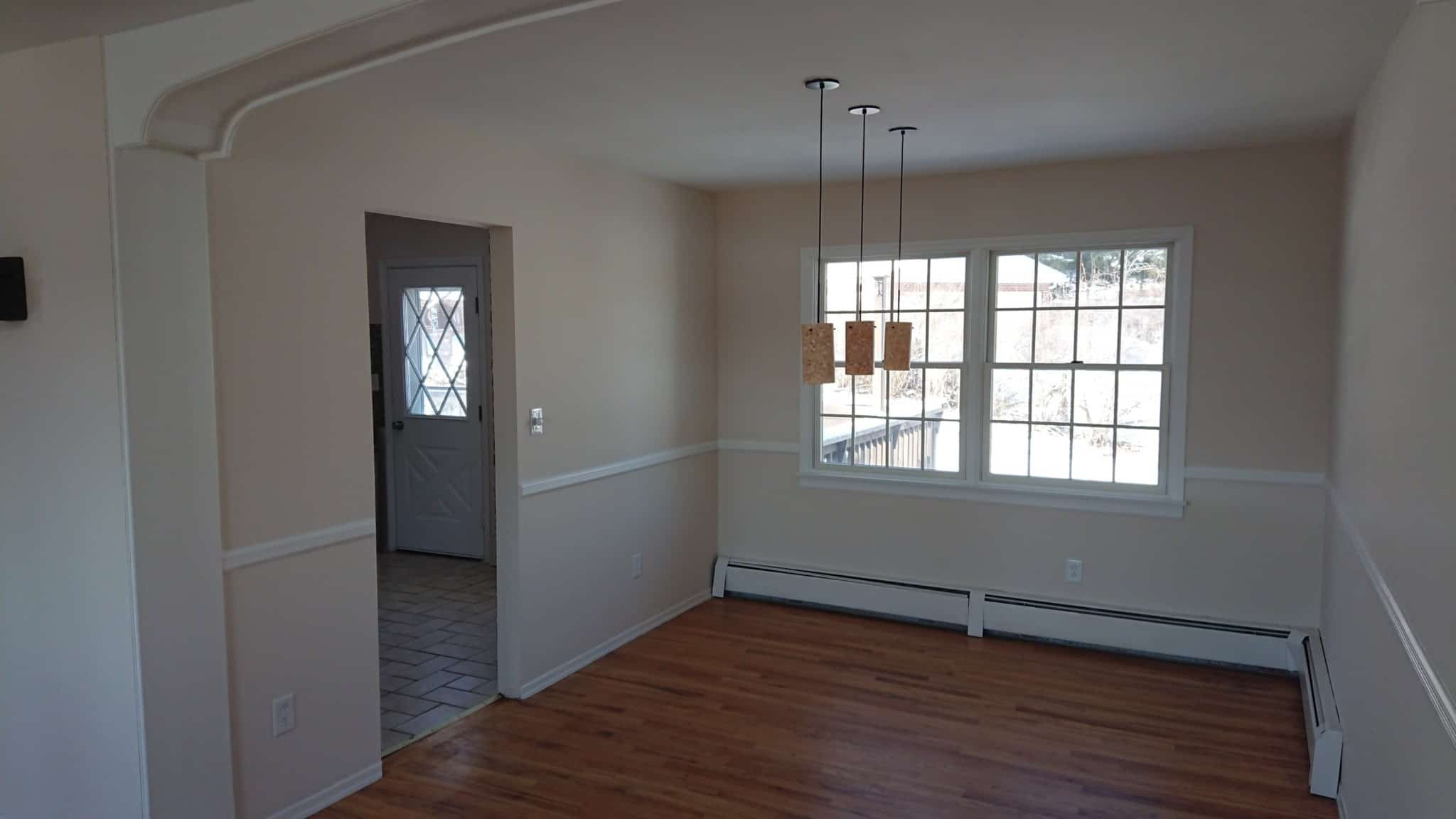
The original footprint had an open quality, but the zones lacked cohesion. Prep space, cooking space, and transition areas competed instead of working together. By partially redefining the room boundaries, we created better organization and improved cabinet placement without overextending the structure of the home.
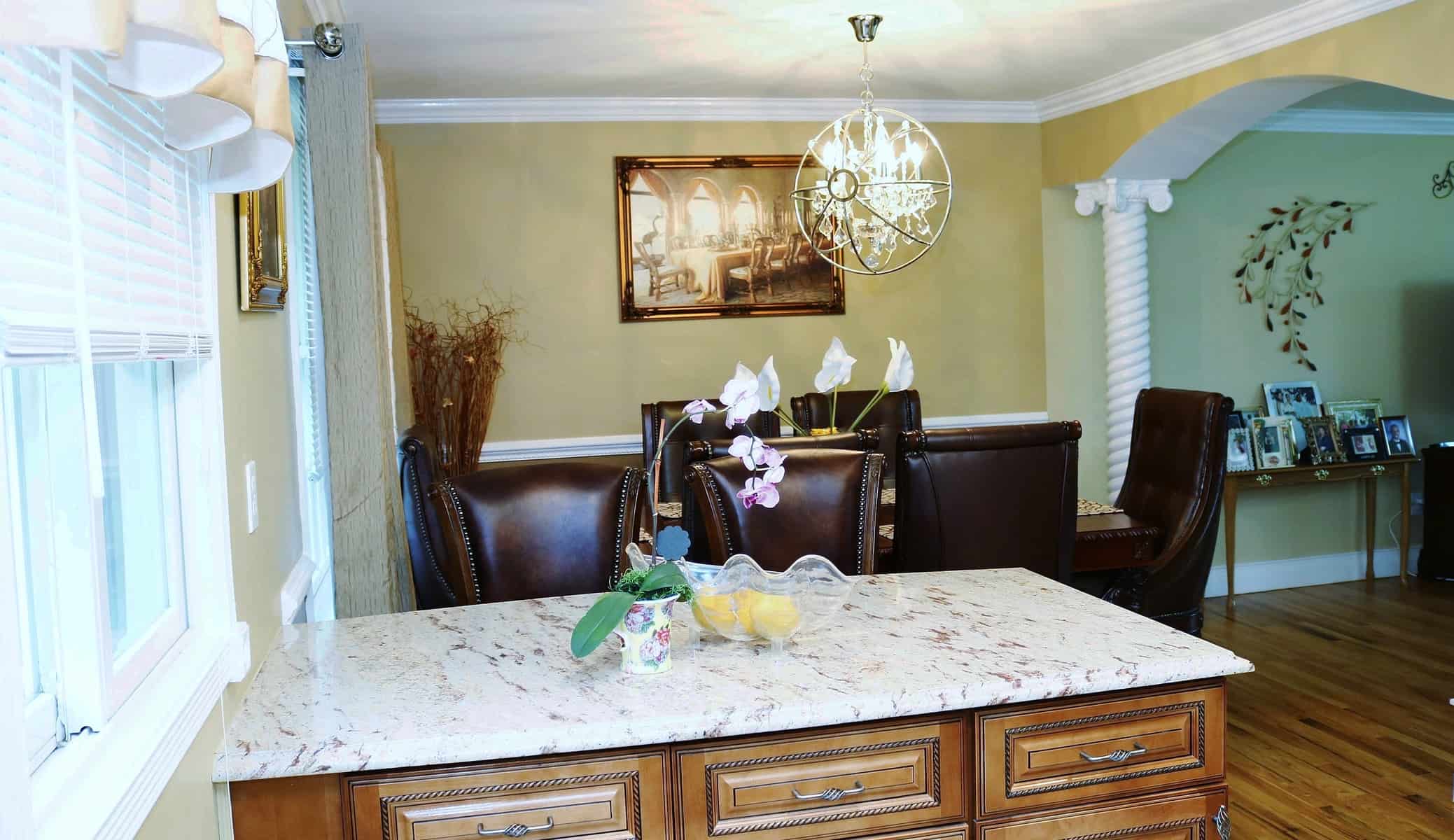
Strategic planning allowed us to increase functional storage while maintaining balance between the kitchen and adjoining dining area.
This is where design-build coordination matters. Every structural adjustment was evaluated in relation to cabinetry, lighting, and appliance integration.
Layout Redesign and Range Relocation
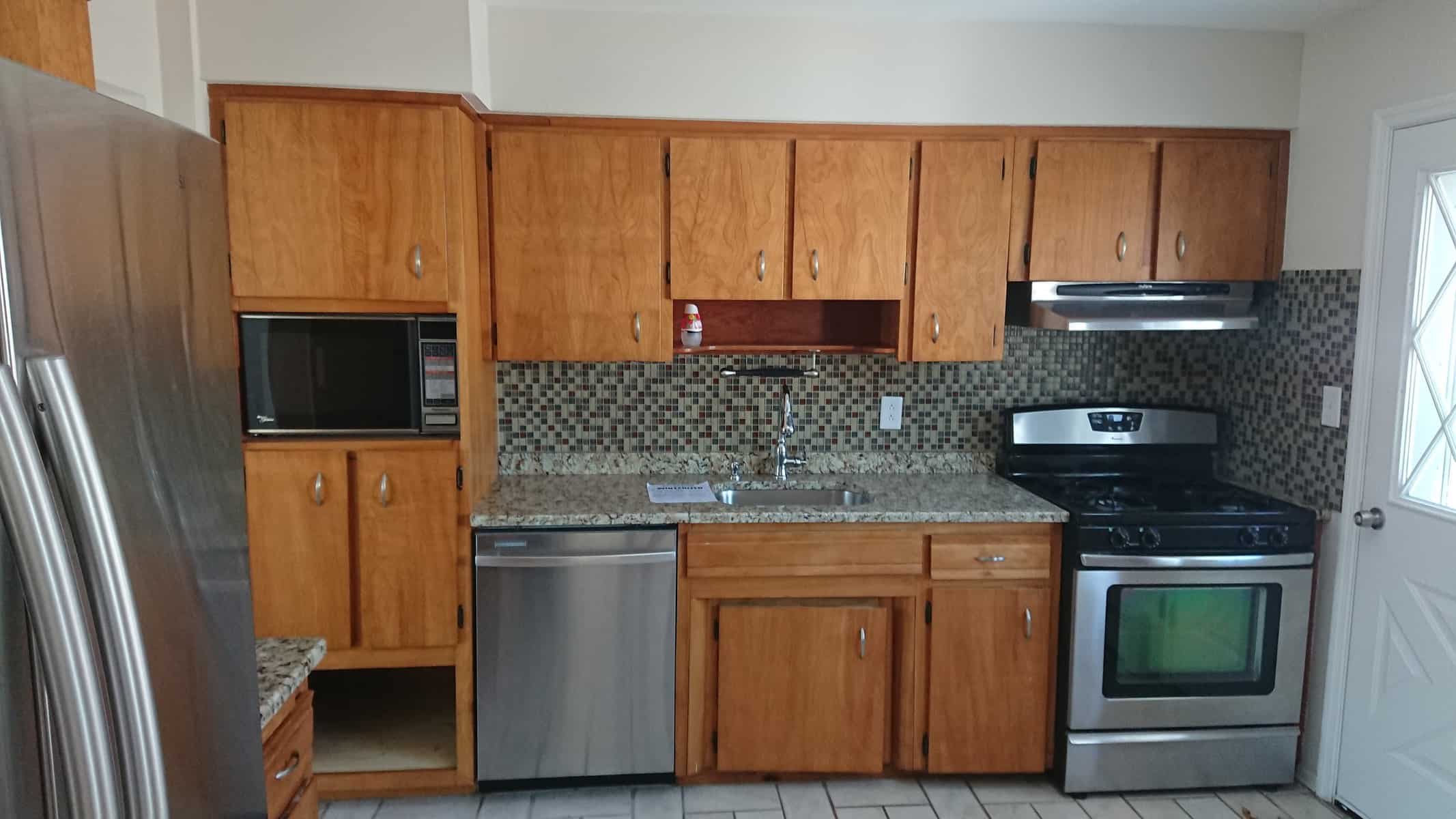
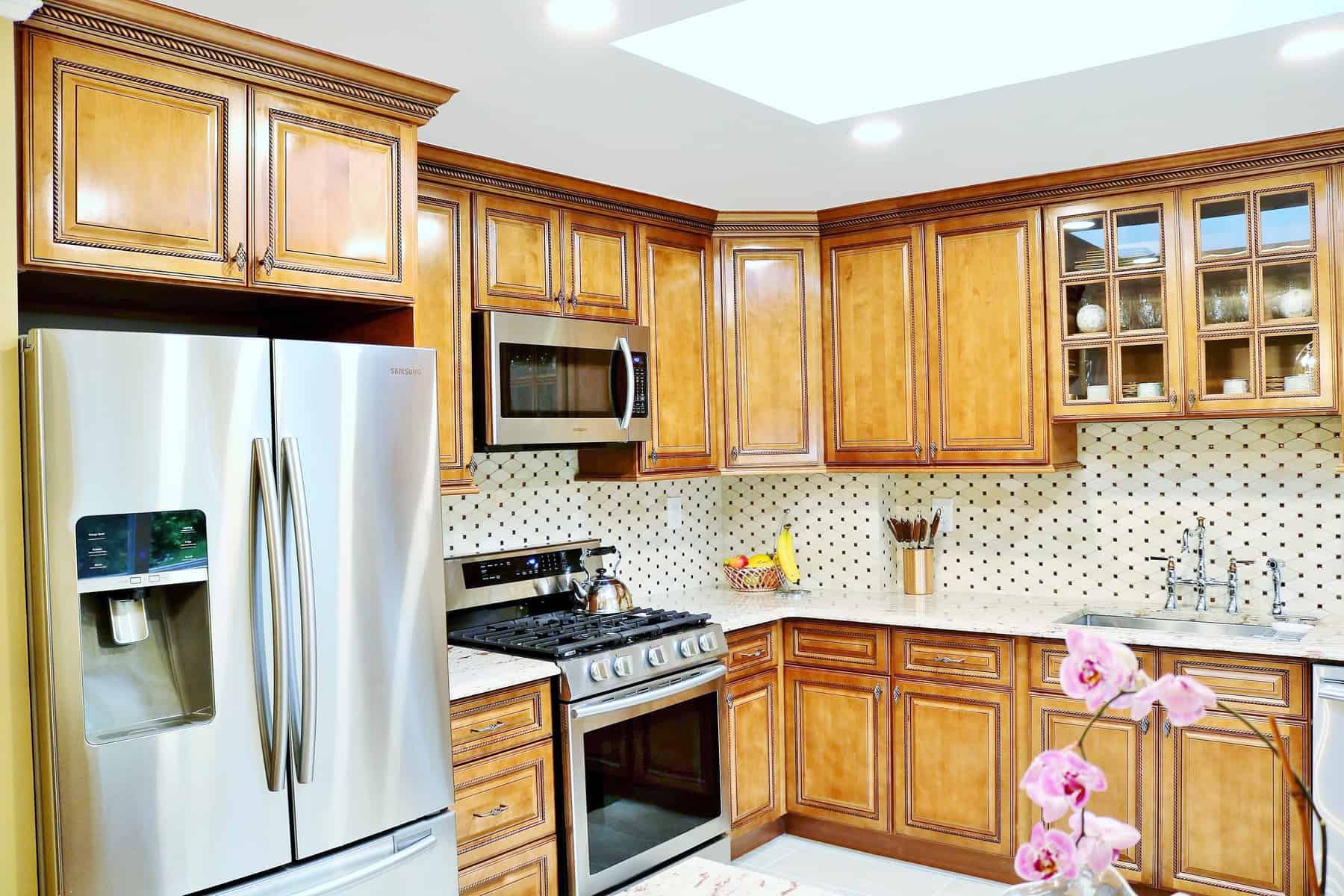
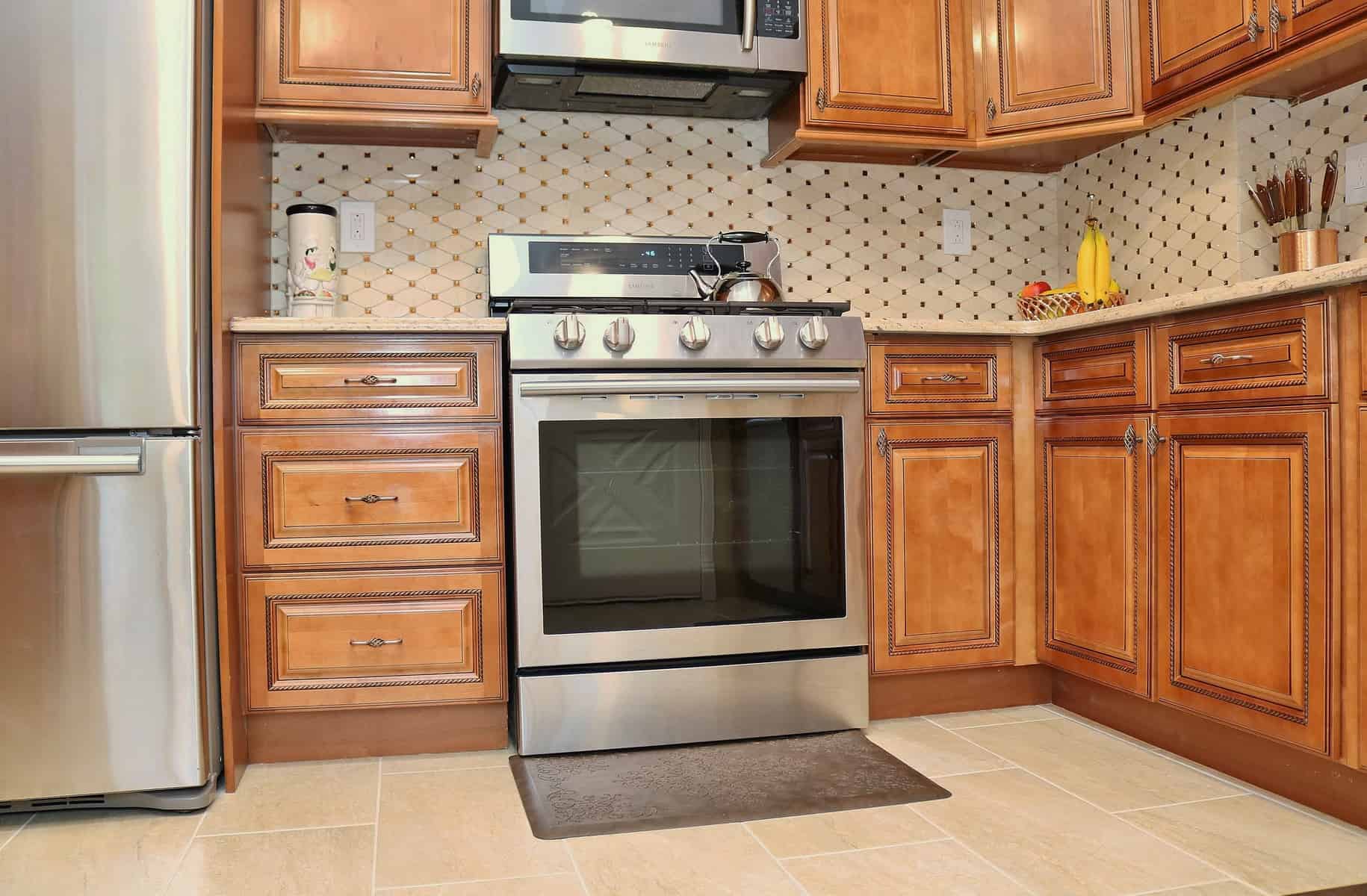
One of the most impactful changes in this renovation involved relocating the cooking area. The previous configuration limited counter space and disrupted the natural work triangle, making daily prep feel fragmented rather than fluid. While the room technically functioned, it lacked cohesion between the range, surrounding cabinetry, and primary prep zones.
By repositioning the range and carefully adjusting the cabinetry around it, we were able to restore balance to the layout. Continuous prep surfaces were reestablished, ventilation alignment improved, and visual symmetry returned to the main wall. Just as importantly, traffic flow through the kitchen became more intuitive, allowing the space to support both cooking and movement without conflict.
Rather than expanding the room outward, we refined it inward. That distinction matters. This was not about increasing square footage, but about increasing efficiency within the existing footprint. The kitchen now feels organized, deliberate, and structured — not loosely open, but intentionally arranged for daily use.
Cherry Cabinetry and Material Coordination
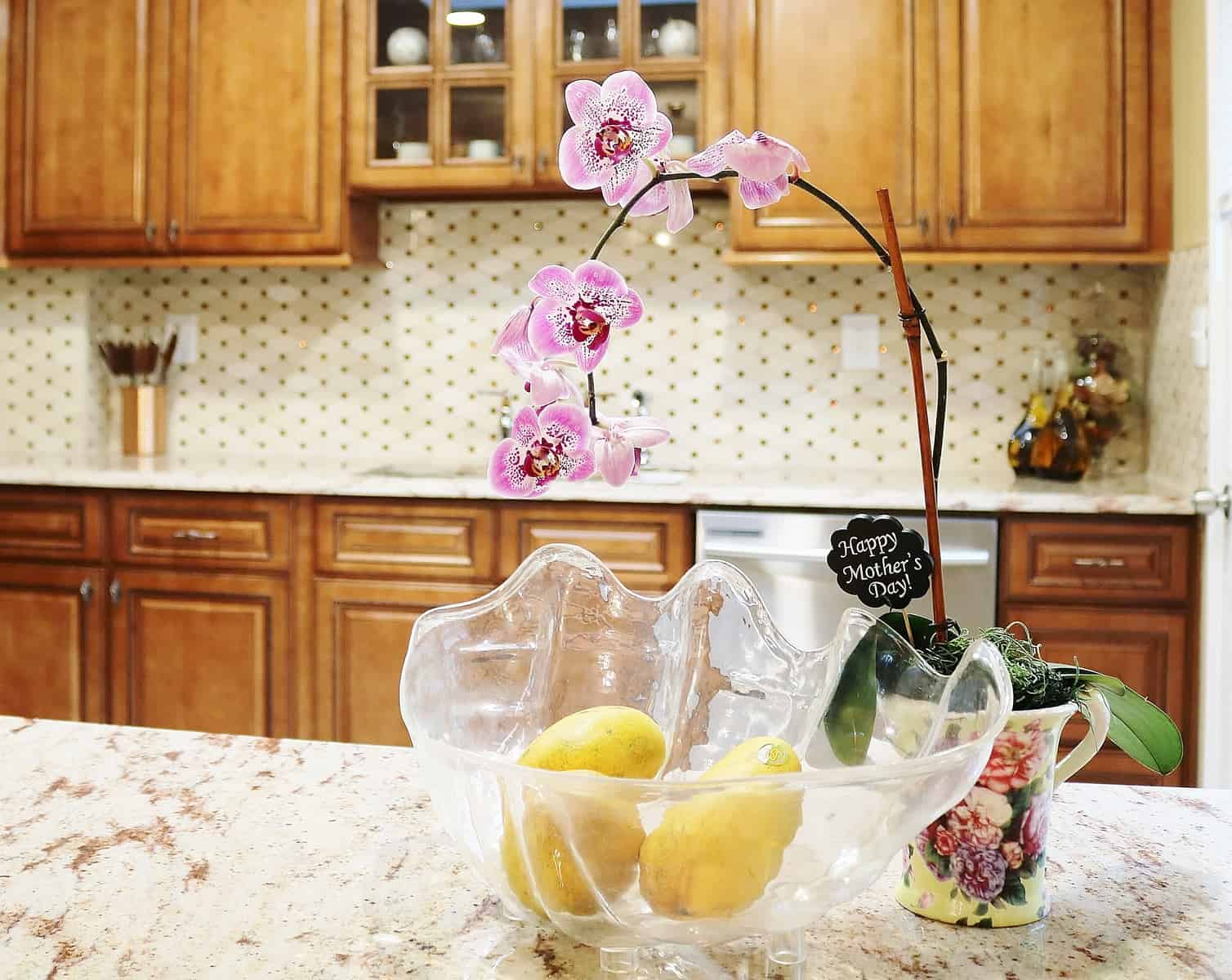
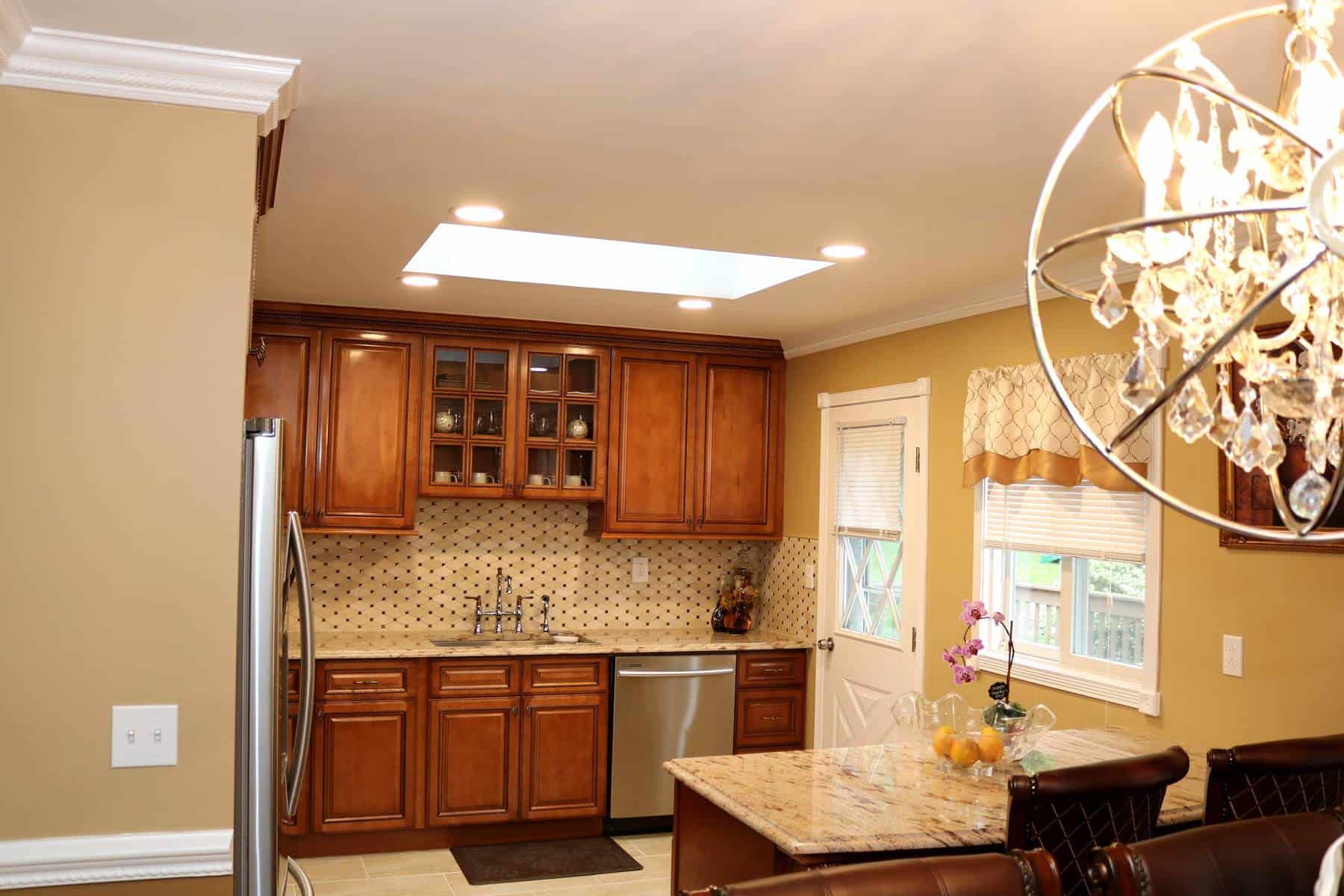
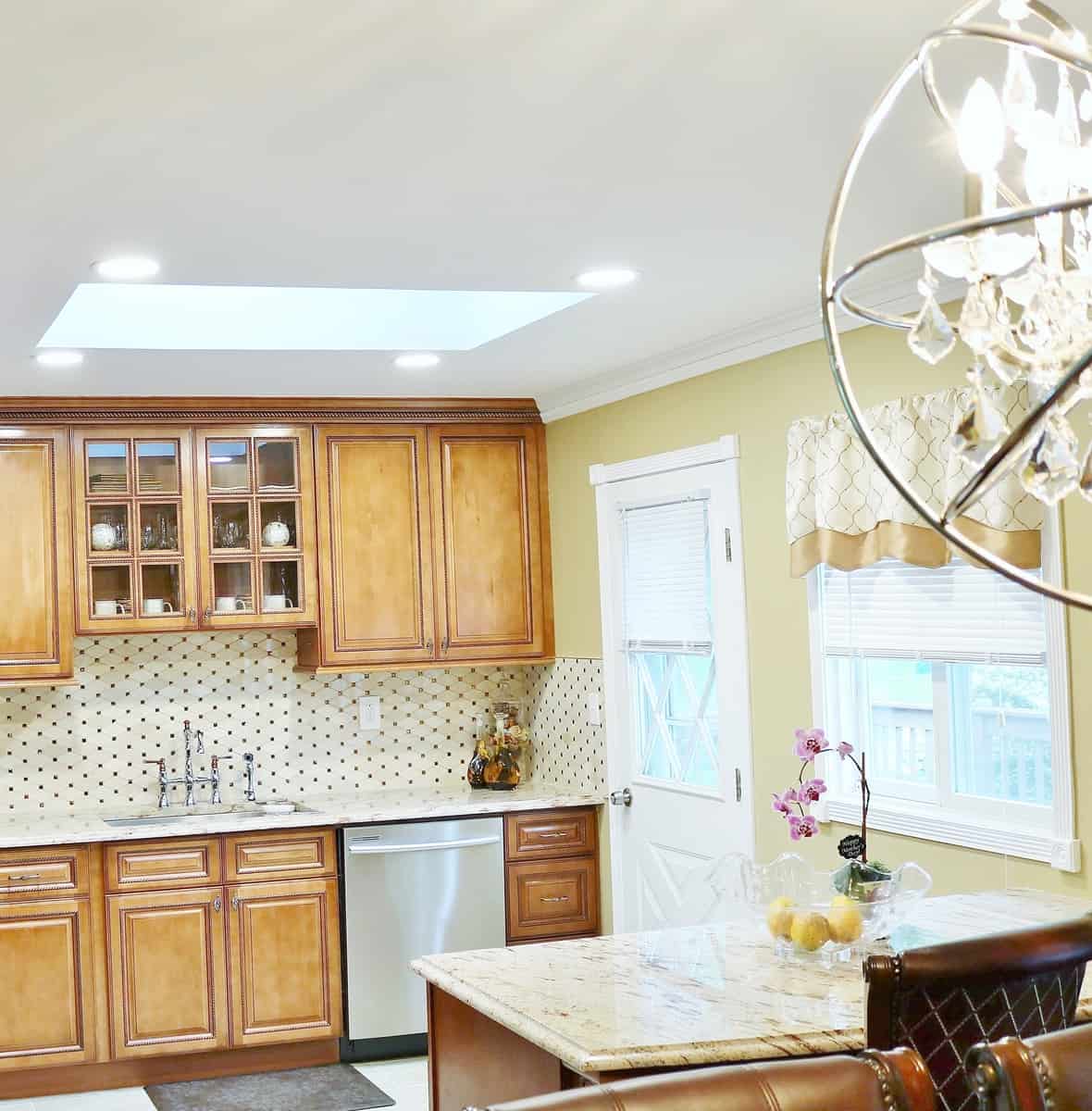
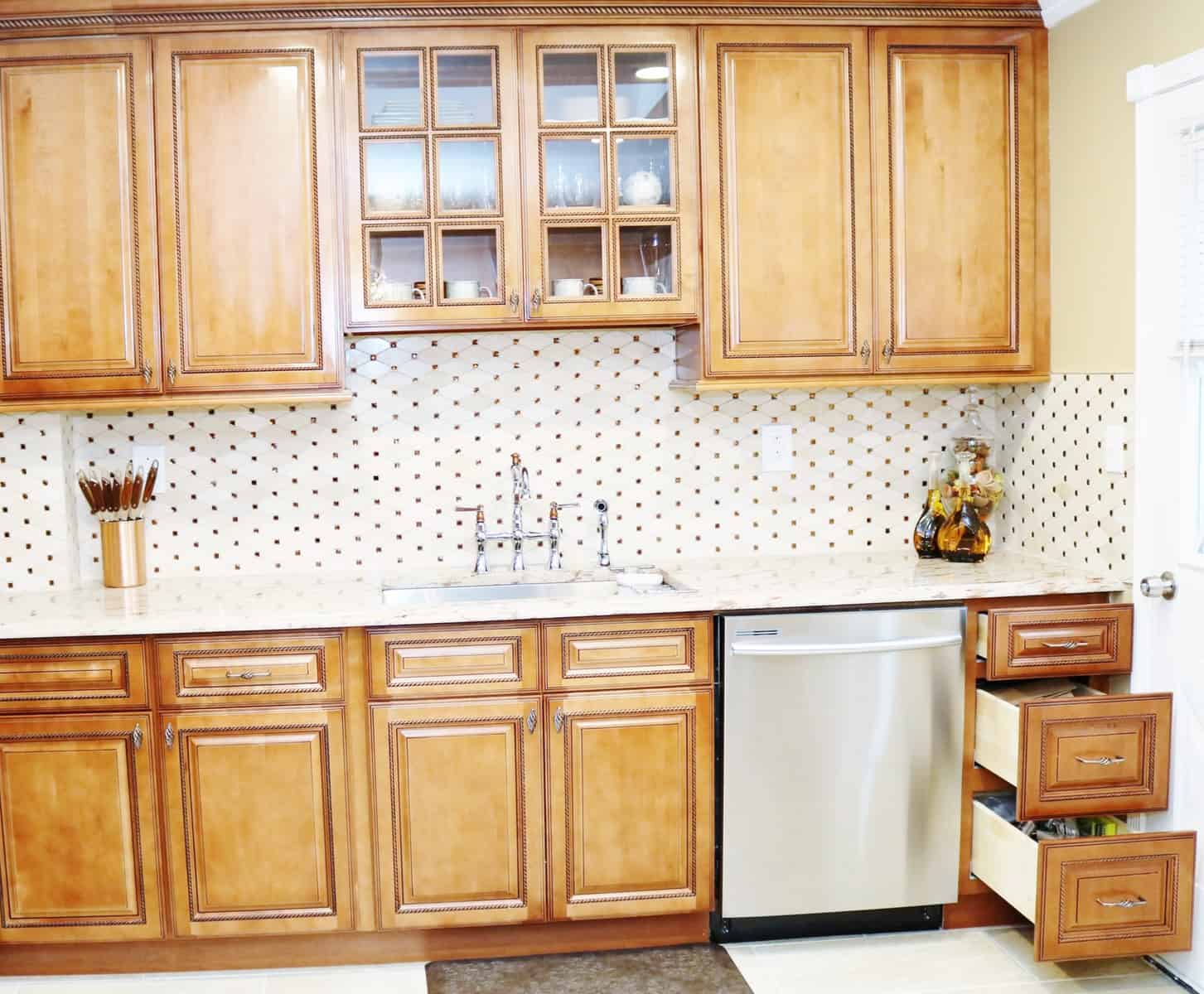
The cabinetry selected for this project was stock cherry wood, chosen for its depth, durability, and traditional appeal. When properly planned and installed, stock cabinetry can achieve a cohesive and elevated result.
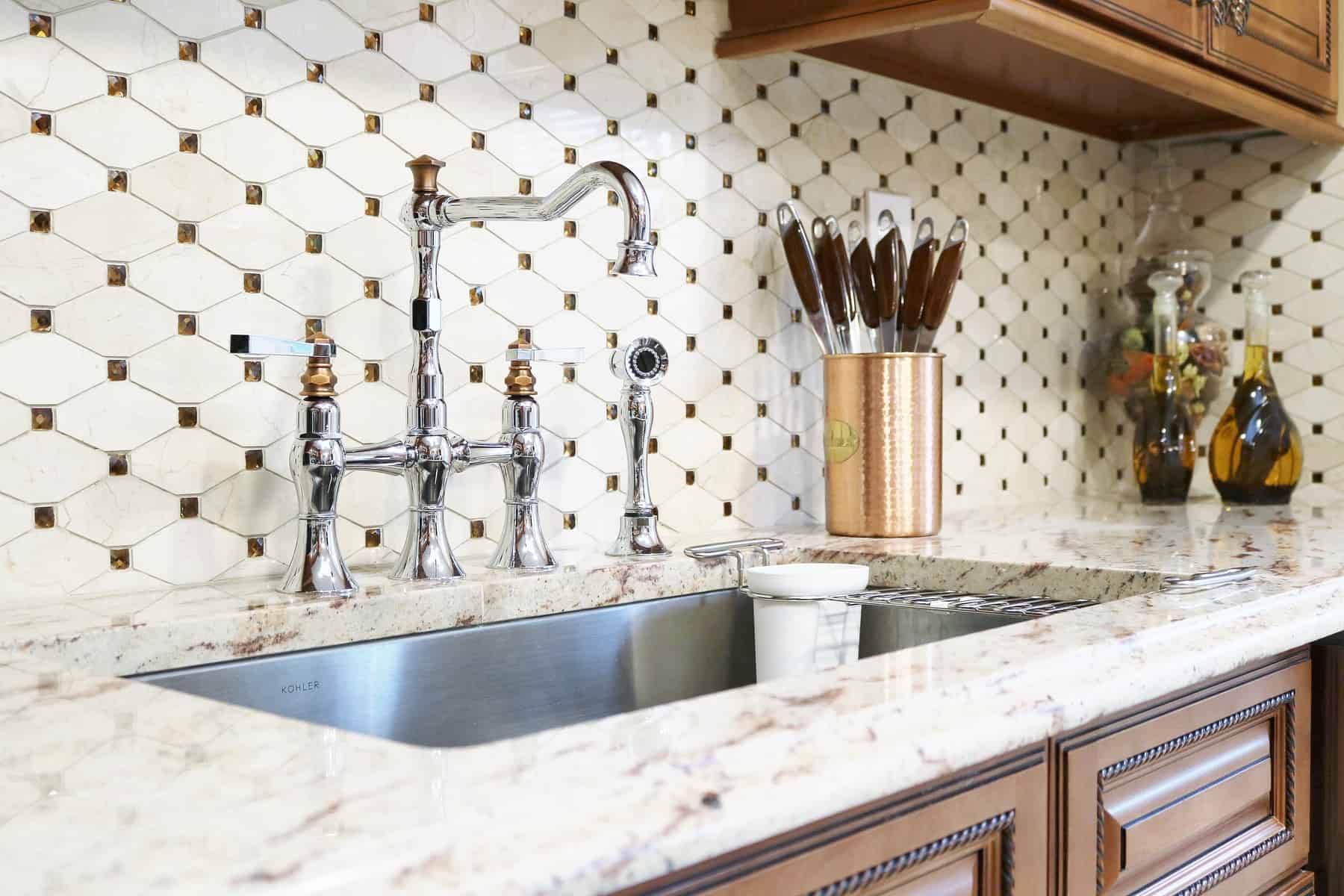
Granite countertops were selected to complement the warmth of the cherry finish, while a diamond-pattern tile backsplash introduced texture and subtle movement. Decorative corbels and polished fixtures reinforced the traditional design language without overwhelming the space.
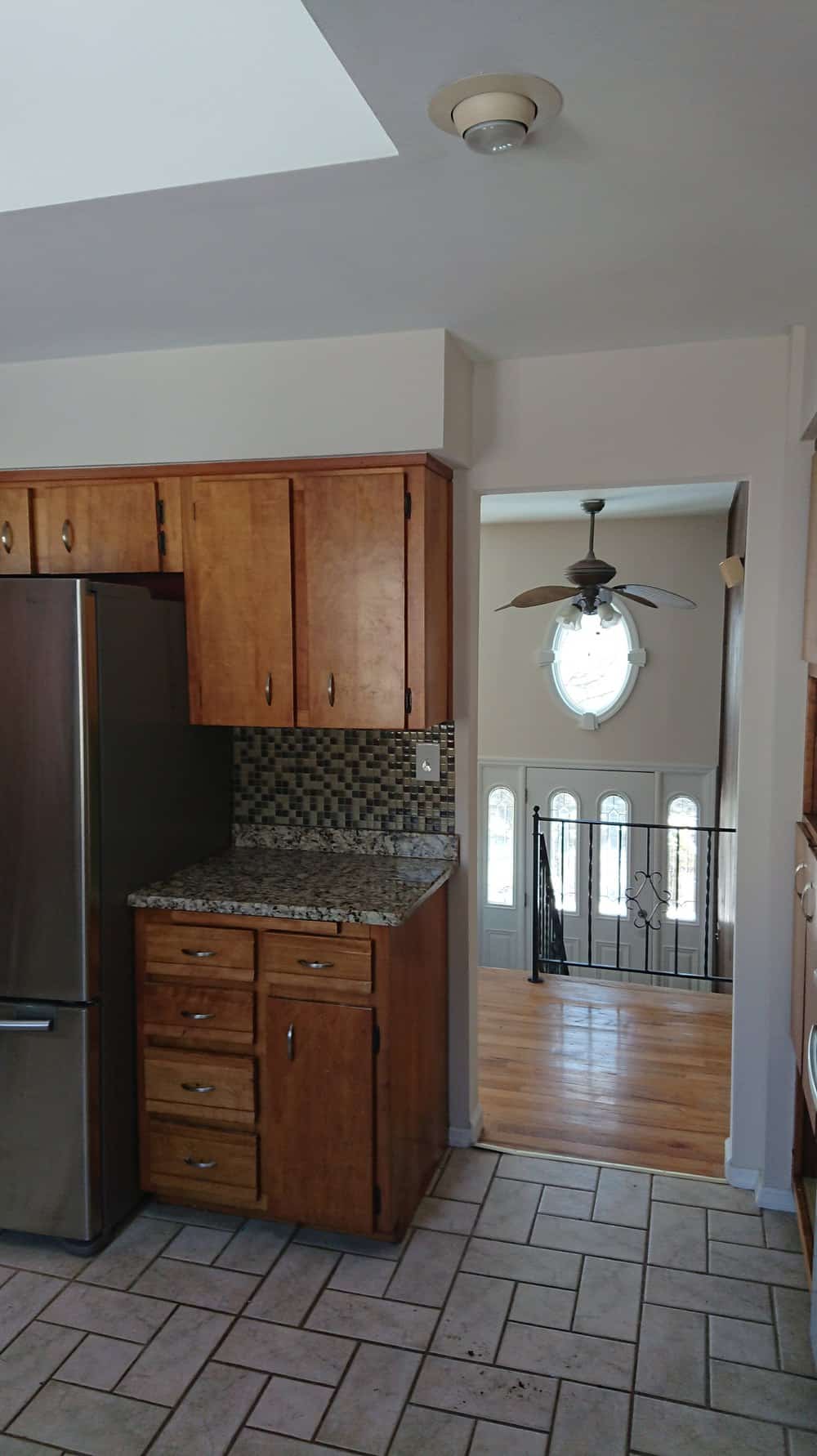
A central skylight plays an important role in this kitchen. Natural light balances the richness of the darker wood tones, preventing the room from feeling heavy while maintaining warmth.
Material coordination was intentional from start to finish.
Construction Efficiency and Mechanical Strategy
An important element of this renovation was minimizing unnecessary mechanical disruption. While walls were adjusted and appliances repositioned, the project avoided extensive relocation of plumbing and mechanical systems.
That level of foresight reduced construction complexity while maintaining design integrity.
This approach reflects a disciplined renovation strategy — improving function without increasing risk or overbuilding beyond necessity.
Who This Kitchen Remodel Is For
This project speaks to homeowners who prefer classic design over trend-driven aesthetics. It demonstrates that traditional finishes can still support modern cooking habits when layout and cabinetry are engineered correctly.
A traditional kitchen remodel does not have to feel dated. When structure, storage, lighting, and finish selection are aligned, the result is timeless rather than nostalgic.
Project Summary
This traditional cherry kitchen remodel included layout redesign, range relocation, selective wall adjustments, granite countertop installation, and coordinated stock cherry cabinetry. The renovation focused on improving functionality, storage capacity, and traffic flow while maintaining a warm, classic design aesthetic.
Considering a Traditional Kitchen Remodel?
If you’re planning a kitchen renovation and want a layout-driven design approach that balances structure, storage, and timeless finishes, explore our kitchen remodeling process and see how we guide projects across Westchester County from concept through construction.